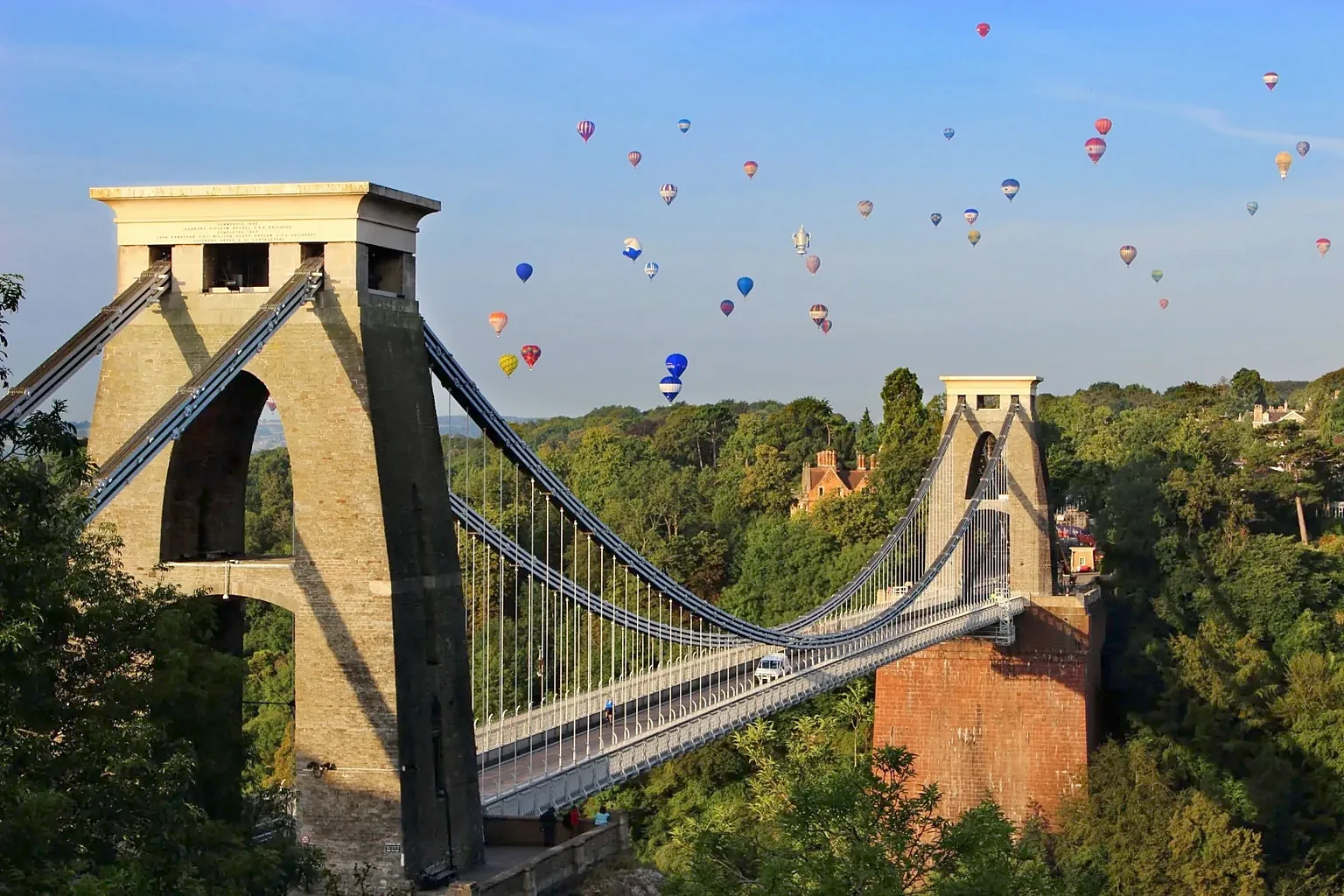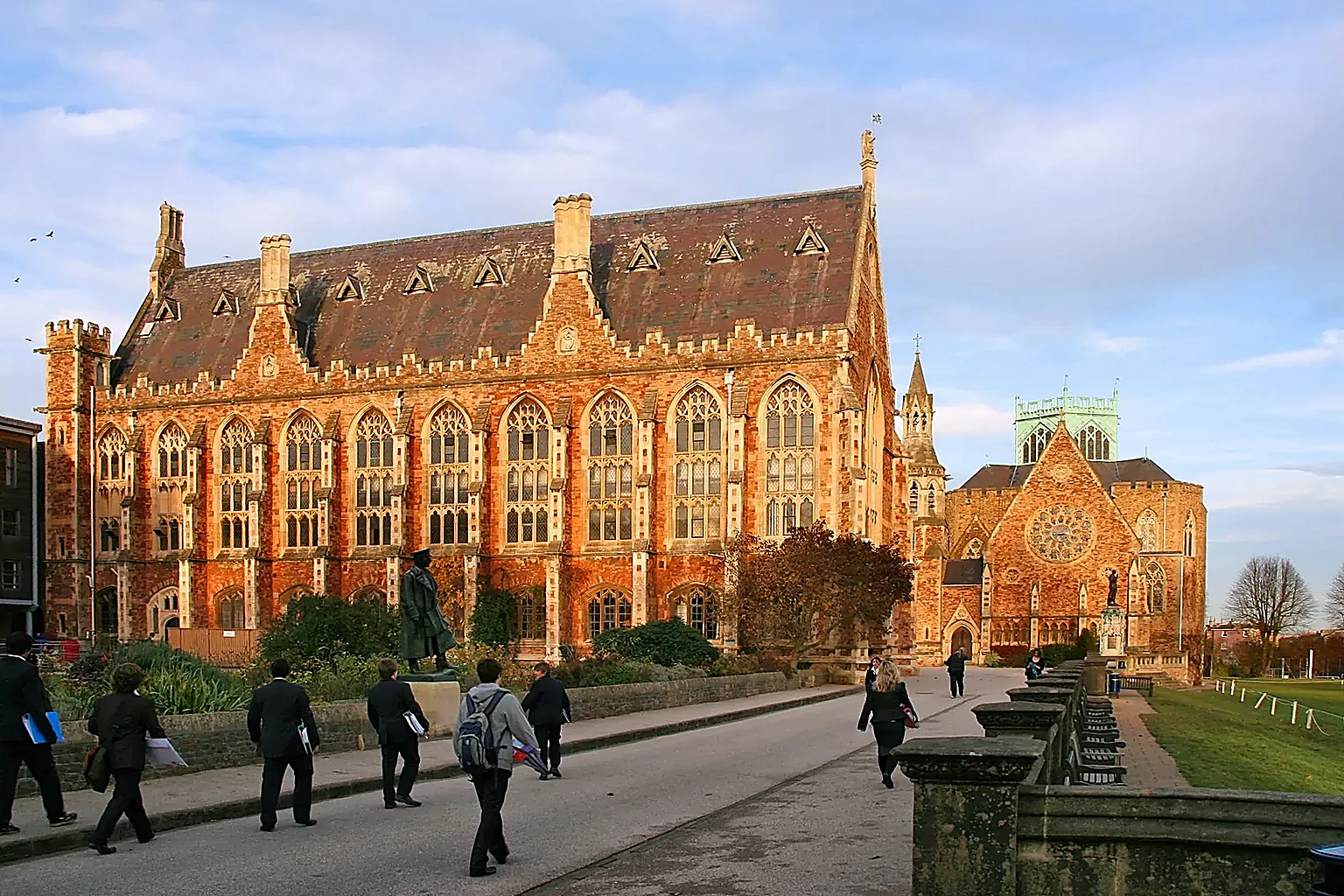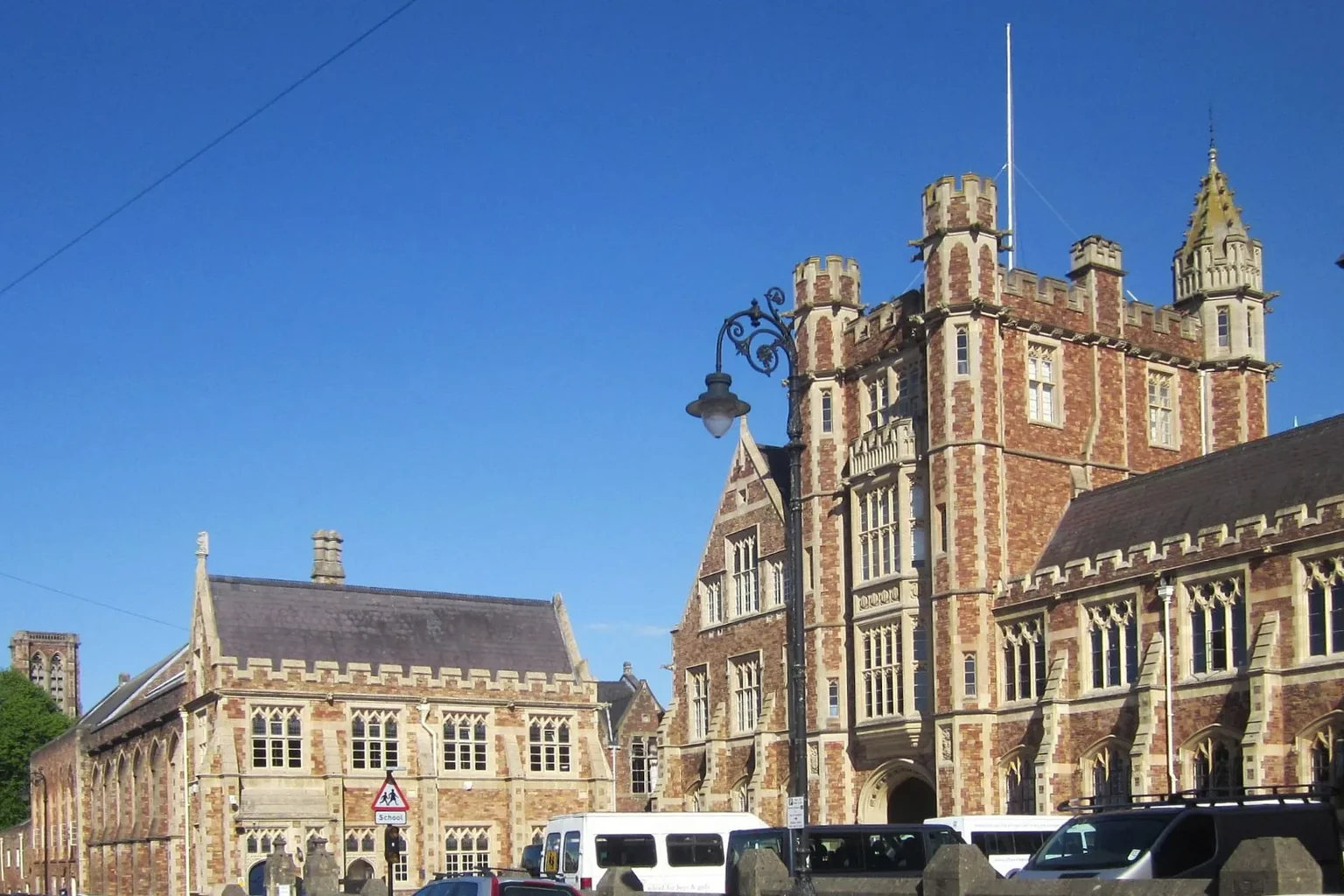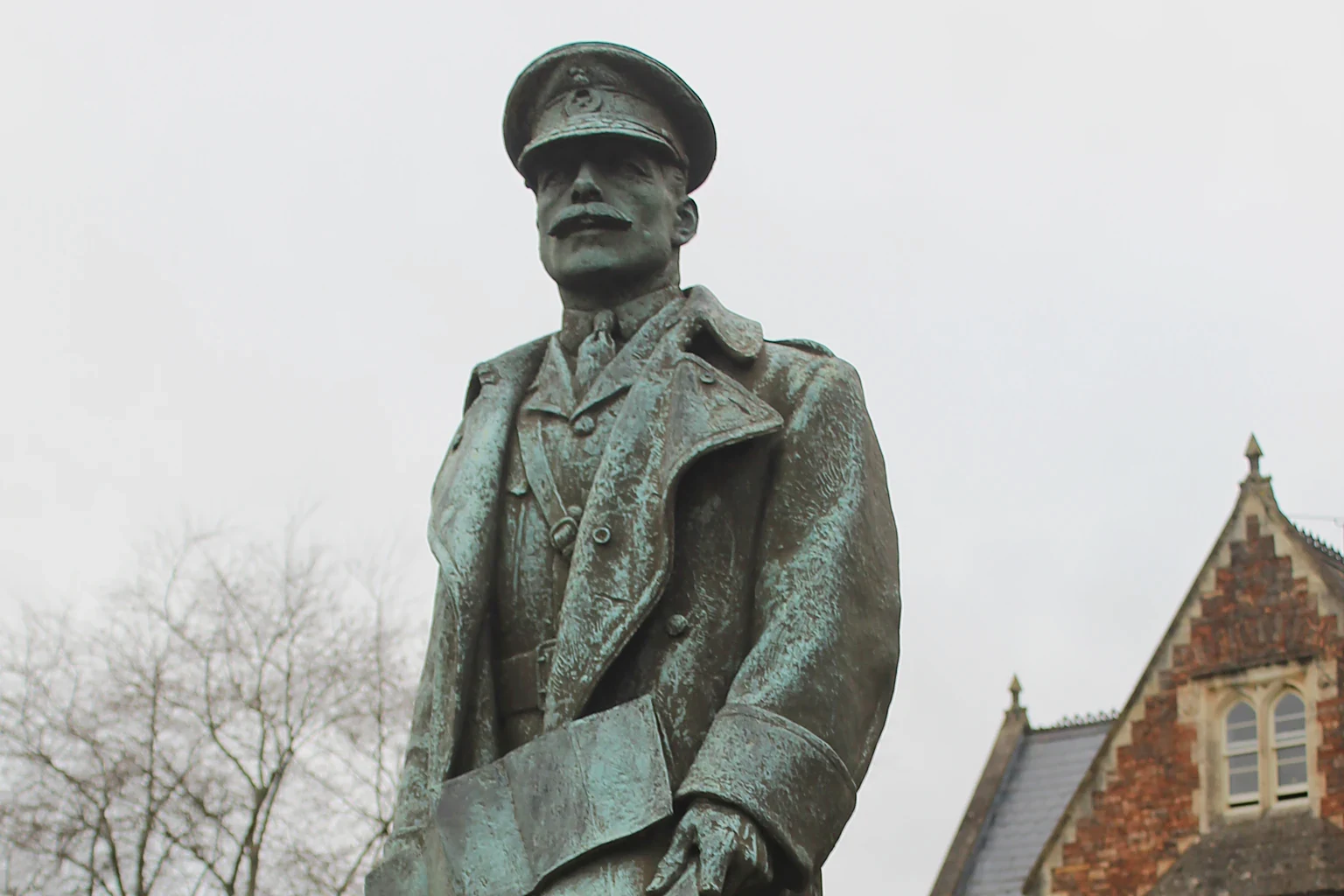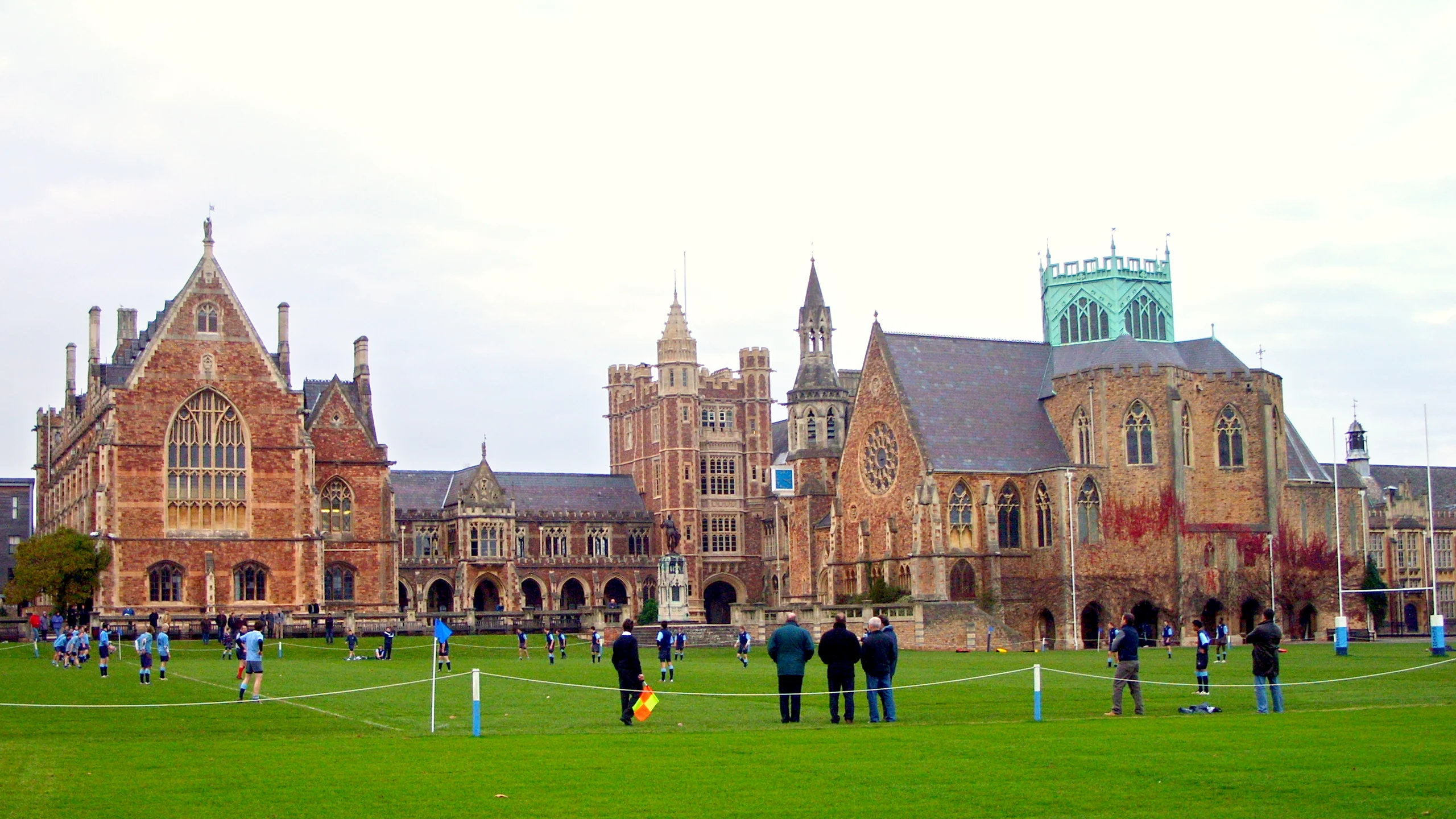
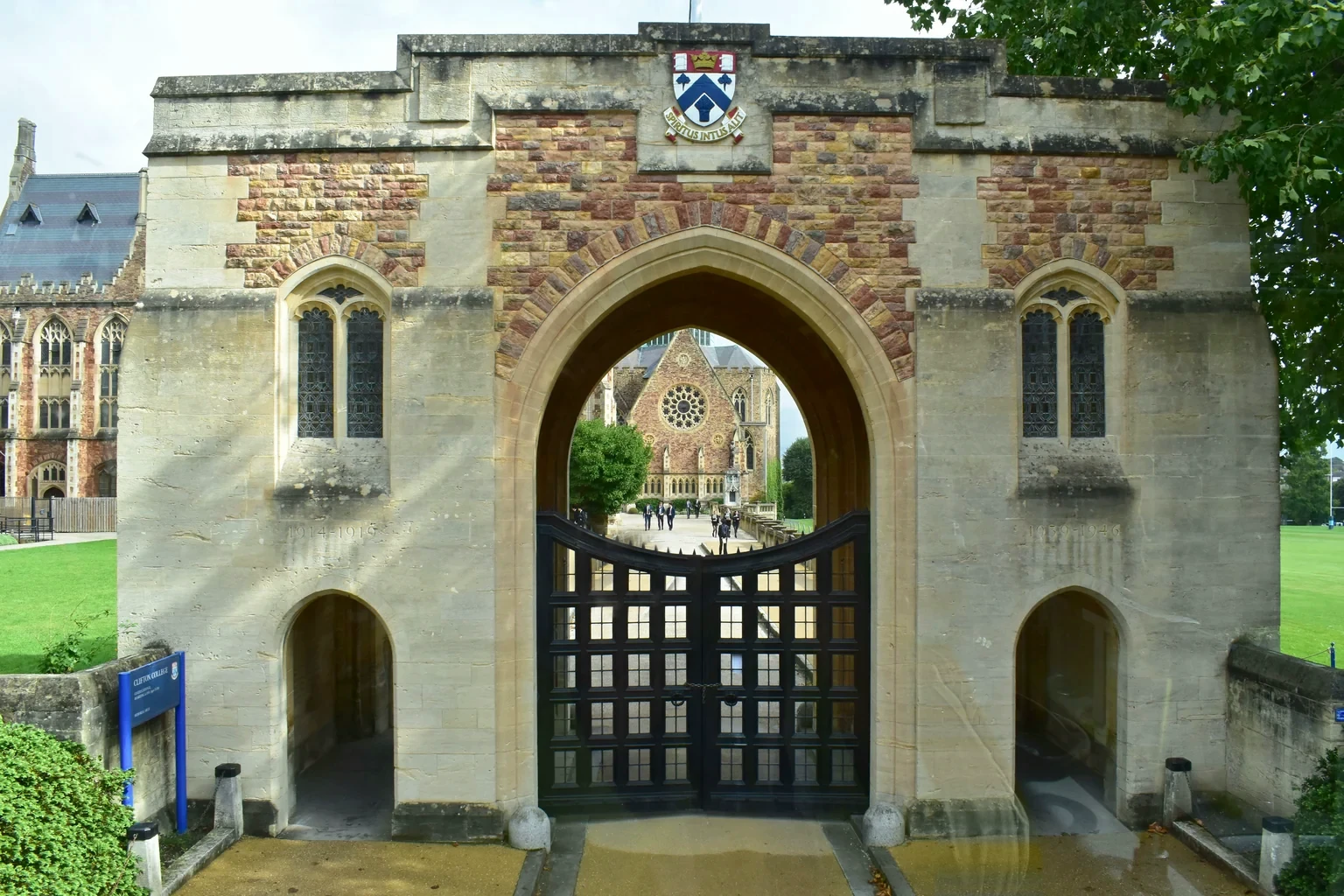
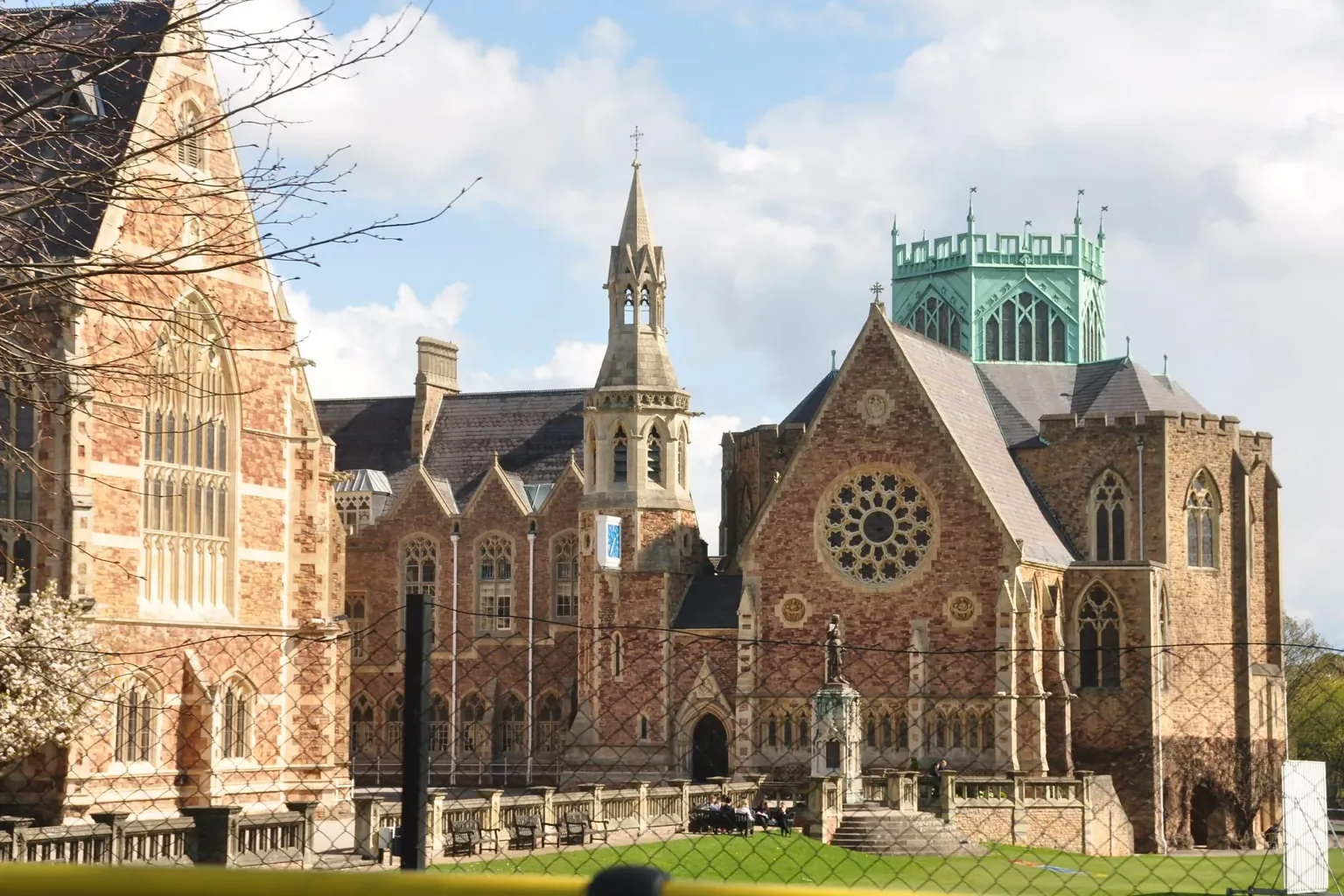
Walk around Clifton, the hilly western edge of Bristol, England, and sooner or later you end up on College Road. Start at Brunel's suspension bridge, strung across the Avon Gorge since 1864, wander through the Georgian terraces of Clifton Village and on up the hill, and within a quarter of an hour the Victorian stone of the college comes into view. Opposite the day houses stands an arch, designed by Charles Holden in memory of the teachers and pupils who died in the two World Wars. It comes with a rule: anyone walking through it takes their hands out of their pockets, and by tradition removes their hat. On the other side, in front of School House, stands a life-size statue of Field Marshal Douglas Haig, an Old Cliftonian, as former pupils are called, who commanded British forces on the Western Front in the First World War. Behind him the cricket field opens out, a long sweep of green with the chapel and the tower beyond. At Clifton the past is always in sight, and usually within reach of a rule.
All of it began, rather unromantically, as a business: a joint-stock company formed by a group of Bristol citizens in 1860. It opened in 1862 with sixty-nine pupils, each given a number in a register kept without a break ever since. P1 is Francis Charles Anderson. Its first headmaster, John Percival, made it unusual. He put science ahead of classics, the Latin and Greek every gentleman's son was supposed to need, and took Bristol's day boys on the same terms as boarders. For more than a century the school also kept a boarding house for Jewish boys, with its own synagogue.
Percival also argued for women's higher education and helped found a girls' school in the city. His own school took longer to catch up. Girls arrived only in 1987, and Clifton became the first of the old boys' public schools, as Britain's traditional private boarding schools are known, to go fully co-educational. Today it sums up its aim in one line: character is as important as capability. The houses are where that gets worked out, and this is where a reader of the Harry Potter books starts to feel at home.
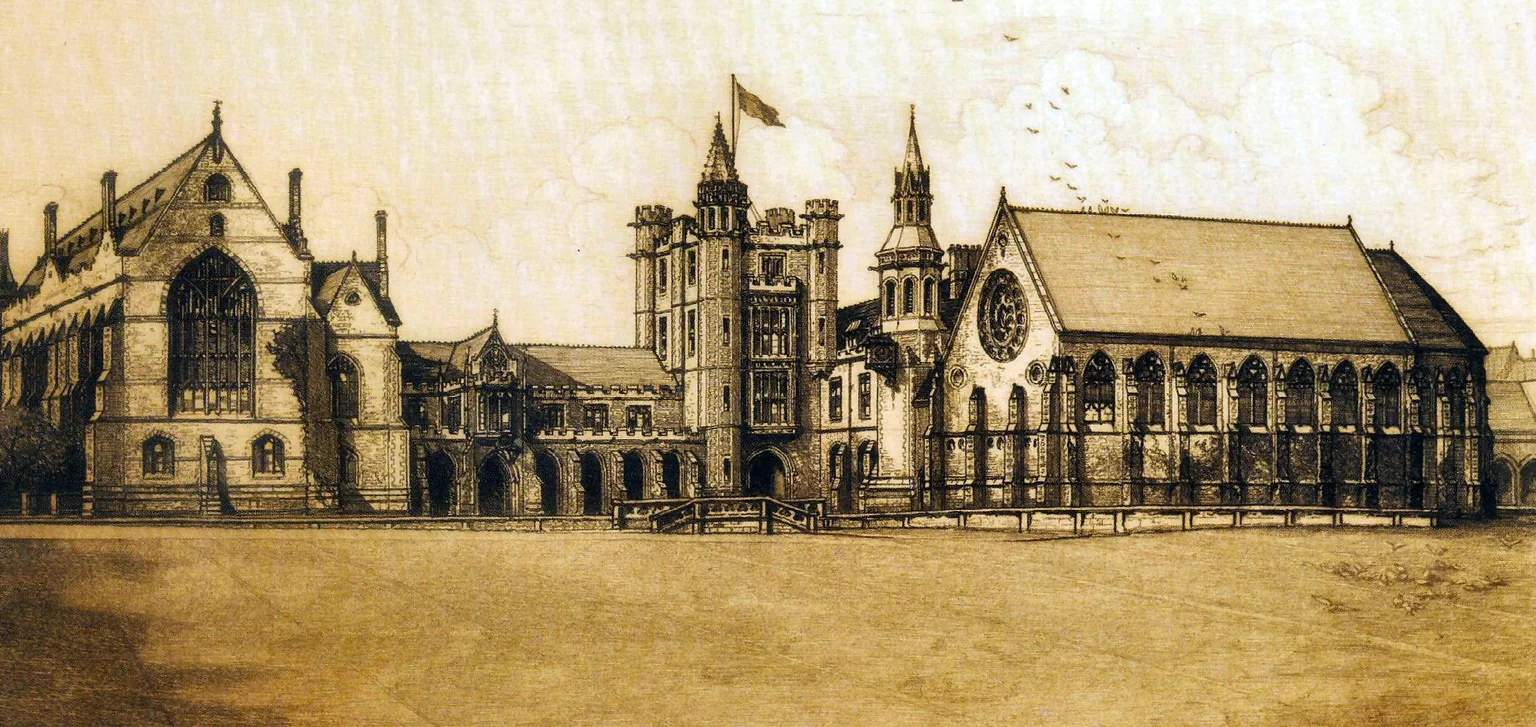
Like Hogwarts, J. K. Rowling's school for young wizards, Clifton has a chapel, a tower, a great hall called Big School and its first headmaster buried in the crypt beneath the chapel. And, like Hogwarts, it runs on houses. Every pupil belongs to one, boarder or day, and there are twelve, each with its own colours and Latin motto. The colours run in stripes across the tie and the sports jersey, so that on match days you can tell at a glance whose side anyone is on. School House lives under Spes ancora vitae, hope is the anchor of life. Holland's, one of the newest girls' houses, chose something less patient: Non ducor duco, I am not led, I lead.
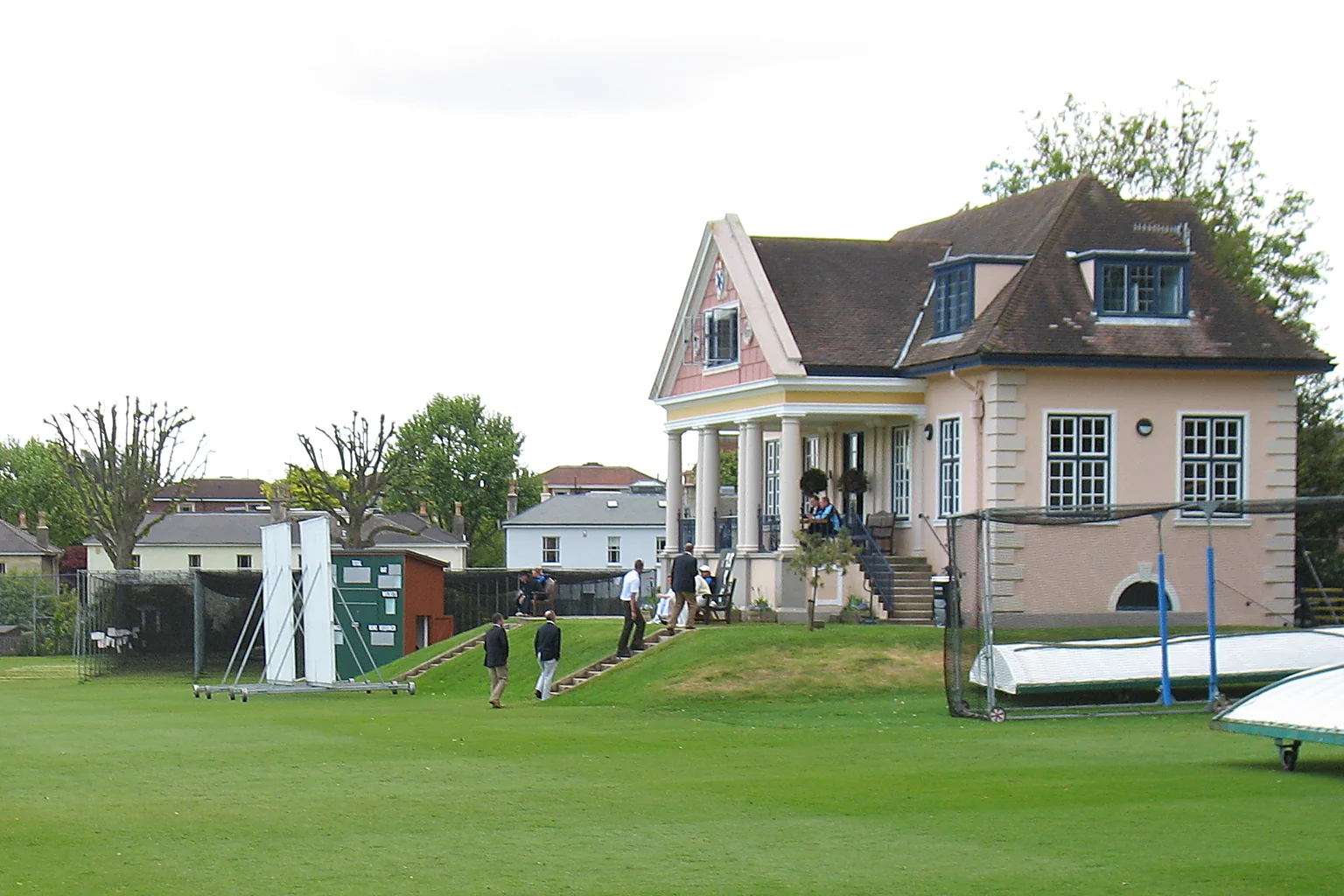
Hogwarts has Quidditch. Clifton has the Close. Henry Newbolt, a former pupil, put it into the first line of his poem "Vitaï Lampada": "There's a breathless hush in the Close to-night." On a pitch nearby, in June 1899, a thirteen-year-old called A. E. J. Collins scored 628 runs without being out, in a match between two houses. Nobody beat it for 116 years. A small plaque on the side of the ceramics building still remembers him.
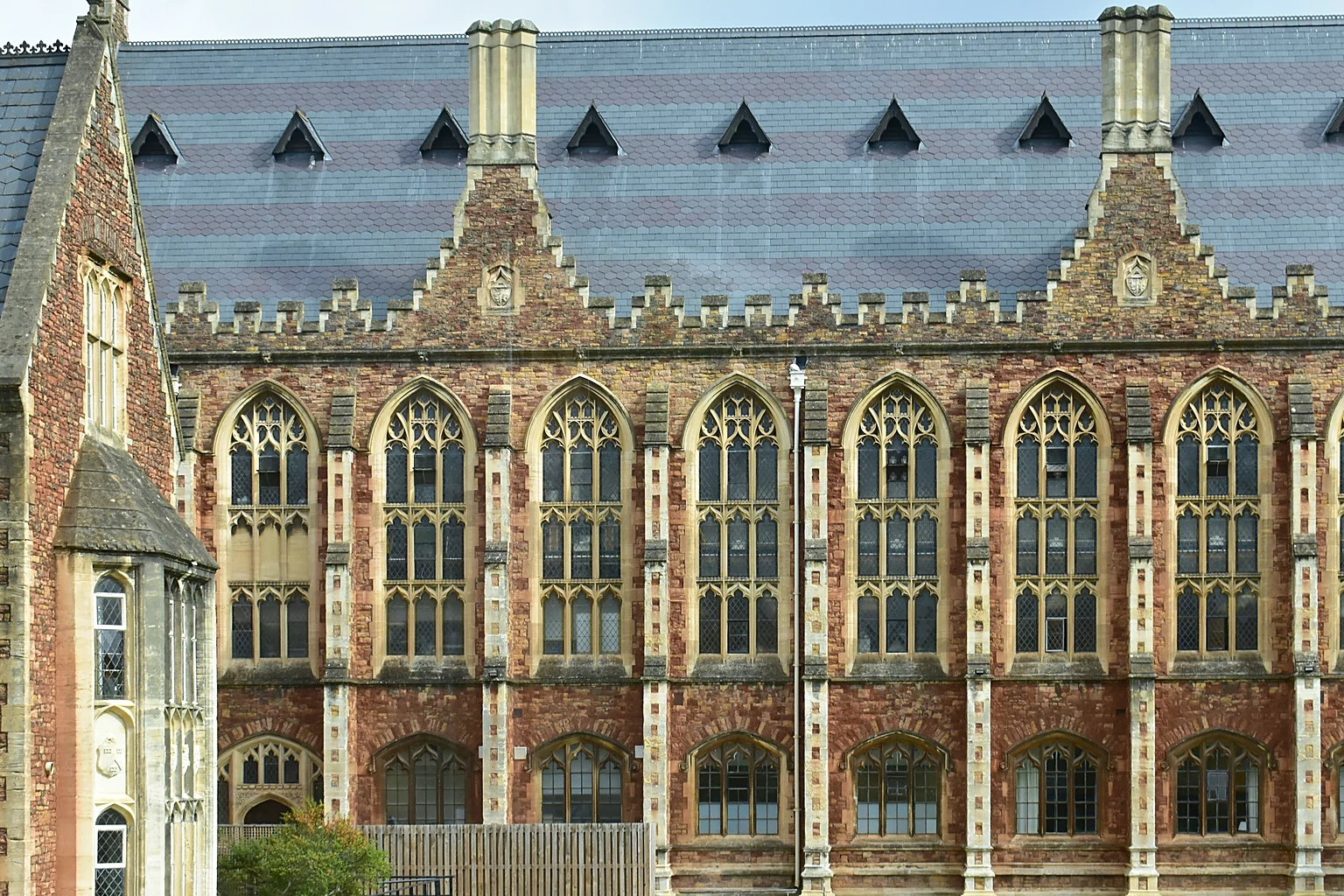
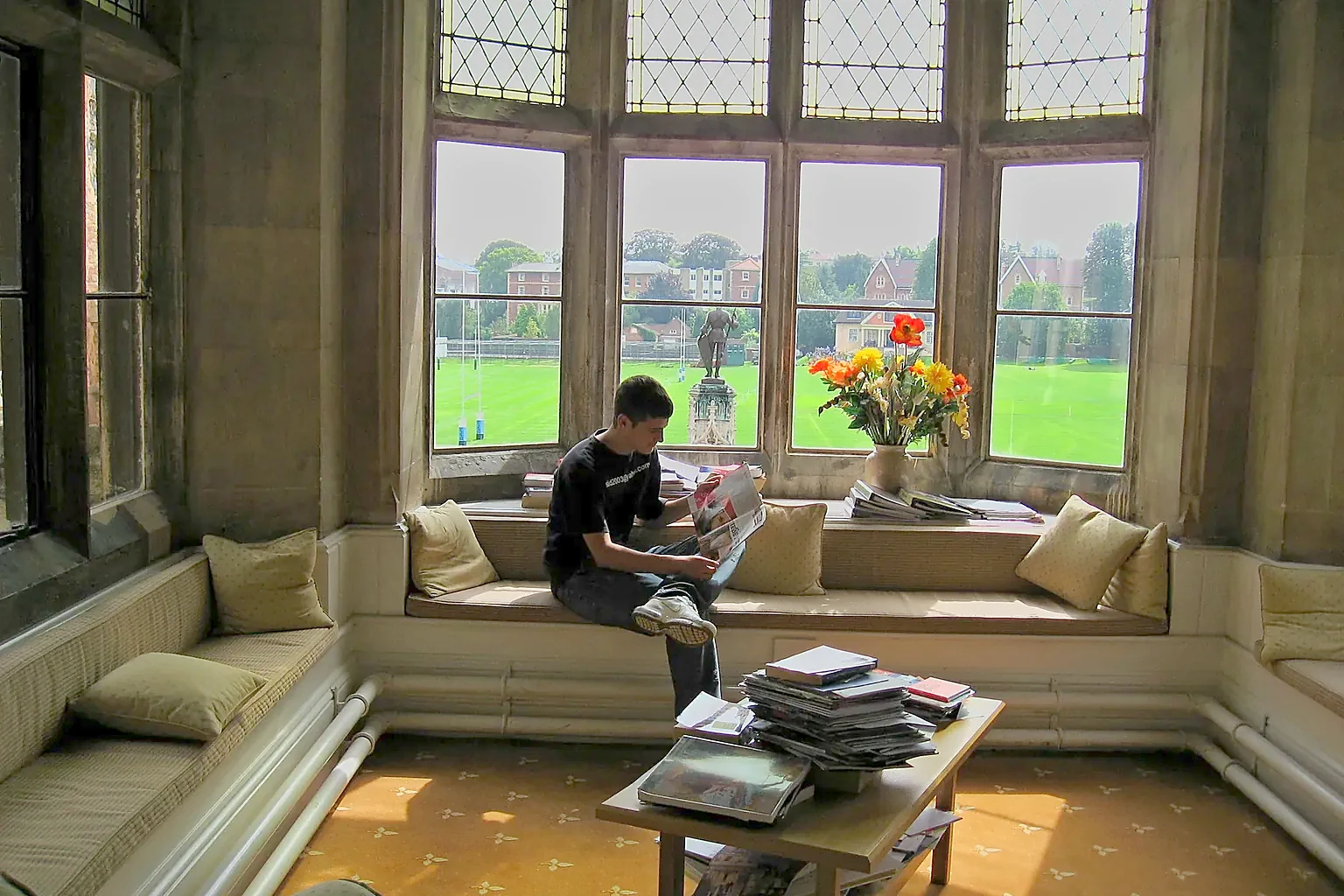
Step inside the library, designed in the 1870s by Charles Hansom, architect of the first buildings, and named after Percival. Its tall leaded windows rise above deep window seats that look straight out over the Close.
Yet at Clifton you learn in and outside the classroom. For a boarder, the week turns around Sunday. A former pupil would remember chapel, the whole school in one place and singing, as the fixed point of every week, and days that ran on callover, when names were checked, on evening prep and on being home by eleven. Mornings in the houses begin early and briskly. A while ago the matron might even wake the slow ones with a splash of water, and a boy whose shoes were not clean enough could find them waiting on his bed. On Saturday nights her husband, a retired policeman, would walk down into Bristol to make sure everybody was behaving. Nobody knew whether it was part of the job or an old habit, but either way, nobody messed about. The couple lived on the ground floor, and in the middle of the house lived the housemaster with his family and their three children, their door always open, which worked both ways. Any boy could knock at any hour, and very little happened in the house without the housemaster hearing of it. Nobody was coddled.
Outside lessons there is rugby and hockey, cricket in summer, and a few older court games most schools have long given up: fives, rackets and real tennis. About a third of pupils learn an instrument. The plays go on in the Redgrave Theatre, named after the actor Michael Redgrave, another Old Cliftonian; so was W. O. Bentley, who founded the car company. And there are friends, made in the house and across the years.
This September a new executive head, Dr Chris Stevens, arrived after ten years in charge of Bradfield College in Berkshire. Just under half the pupils board, some full time, some weekly, some only now and then. Up to a quarter come from overseas, and a good number from military families. "Clifton handles military kids really well," one pupil told the Good Schools Guide, an independent review of British schools. The younger ones hand in their phones at morning callover, a small modern ritual Percival never had to think about.
Percival would have been pleased with what came later. Four Old Cliftonians have won Nobel prizes, the most recent Geoffrey Hinton, in physics, in 2024, for the work that made modern artificial intelligence possible. Not bad for a school that started out arguing for science over Latin.
There have been darker chapters too. In 2020 the school apologised in public for not acting on concerns about former staff, and to the pupils and parents it had let down.
Some things stay put. In the chapel, the stained-glass window behind the altar shows the heavenly Jerusalem, and beneath it a game of cricket on the Close. One of the boys painted on the glass is a son of Norman Whatley, headmaster in the 1920s and 1930s.
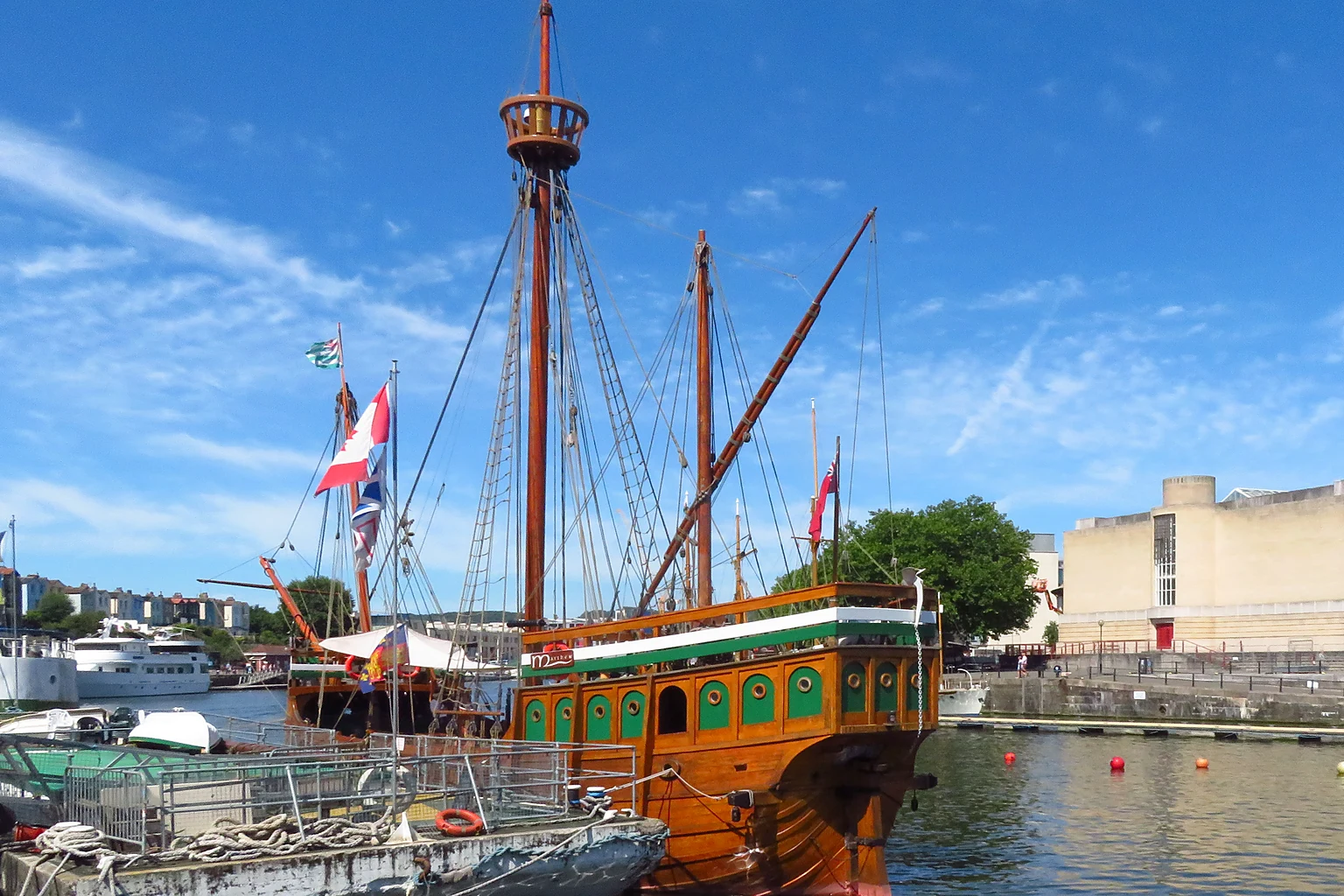
Back through the arch, hands still out of pockets, the walk goes on downhill. The painted terraces of Cliftonwood step towards the Floating Harbour, where a replica of John Cabot's ship, the Matthew, is moored among old warehouses, cafés and boats. For a boarder with a free afternoon, the whole city is a walk away.
Photographs: M. Ślusarczyk, B. Miemietz, Nilfanion, M. Prosser, D. Harper, D. Purchase, 14GTR, C. Park.