
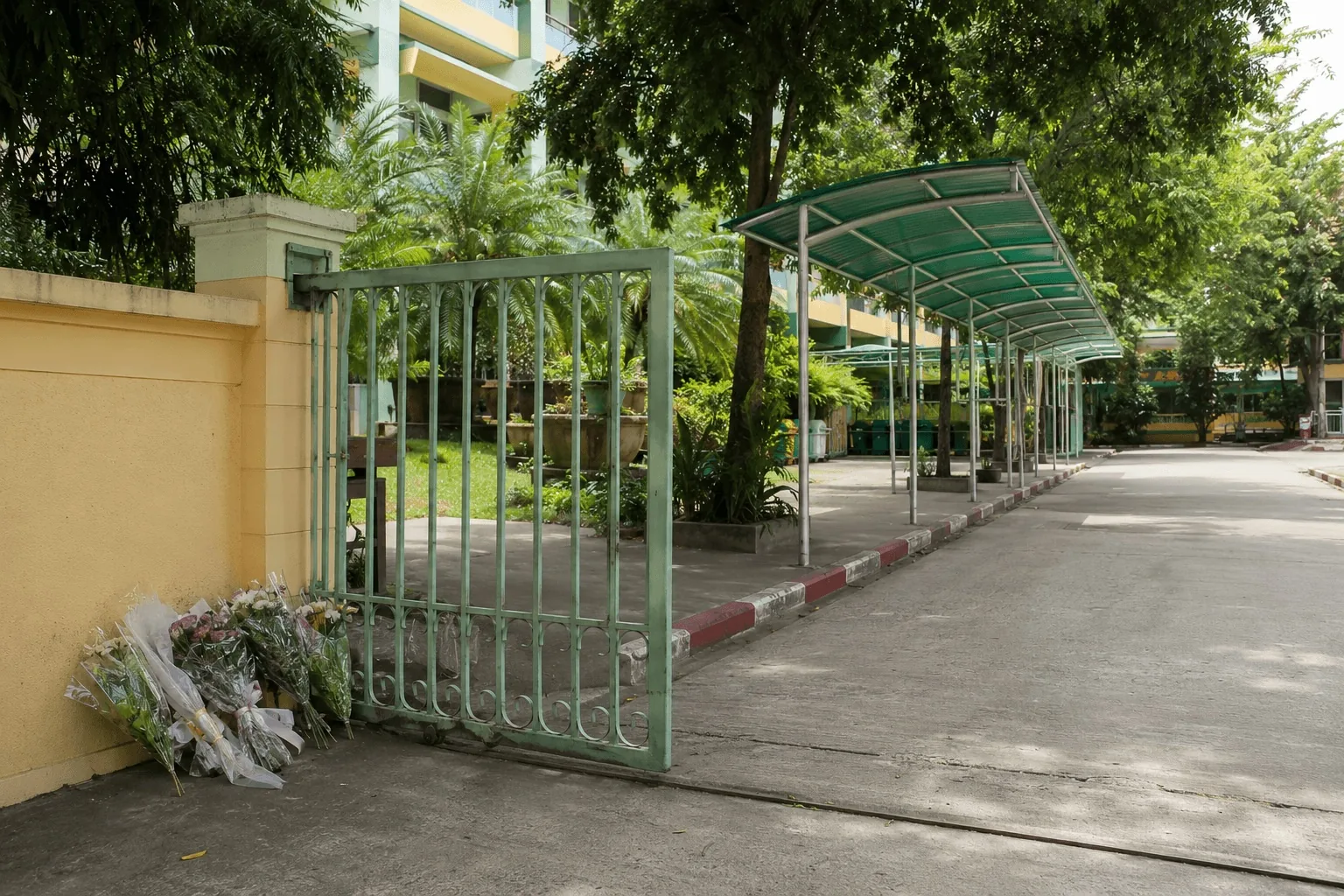
On Friday morning, 7 August, a 14-year-old student shot his grandparents at their home in Nonthaburi, Thailand, then went to Debsirin Nonthaburi School, where he killed five members of staff before shooting himself. Police say the handgun belonged to his grandfather. A 12-year-old girl died of her injuries the following day, bringing the death toll to nine. The motive remains unclear.
Within hours, fragments from his life were circulating as explanations: the games, the videos, the quiet boy. Police found videos about school shootings and mass shooters in his YouTube history, and Roblox links about handling firearms, all accessed on 30 July. The history can establish what he watched, not what it meant or whether it led him to the attack. Investigators are still reconstructing the rest: any change in behaviour, threat, message or preparation.
WHAT CAN BE SEEN
No one has managed to build a reliable profile of a school attacker. A student may consider violence, research or rehearse it, identify targets and look for a weapon without anybody noticing. Yet in many cases, somebody had seen some signs beforehand. One step may be ambiguous; several together, or one leading into the next, require attention.
In a US Secret Service study of 41 K-12 school attacks between 2008 and 2017, grievance formed part of the motive in 83 per cent of cases, most often involving classmates. The word covers bullying, rejection, punishment, anger at a teacher, trouble at home or an incident that seems minor to everyone except the person living through it.
Almost one in three students in UNESCO's survey of 144 countries had been bullied by peers in the previous month. The overwhelming majority will never become violent. Some American attackers who described themselves as victims had also frightened or threatened other children. Bullying warrants a serious response because of the harm it causes; as an explanation for a school attack, it says very little on its own.
In a later Secret Service study of 67 plots discovered before anyone was harmed, 94 per cent involved at least one plotter who had communicated an intention to attack. Often another student received the information. It could be direct, or arrive as a message, drawing, video, list of names, photograph of a weapon, abrupt farewell or remark passed off as a joke.
WHEN SOMEONE SPEAKS
Students are told to speak up, although reporting a friend can carry a high social cost. They also need to know what to report, whether it will be confidential or anonymous, and what the adults will do next. The report should then reach a trained behavioural threat-assessment team, which brings together information held by a teacher, counsellor, parent, friend or the police. The team assesses urgency, considers who may be at risk, arranges support and keeps following the case. RAND's 2025 review of such teams found substantial variation in how they are trained and how they work.
Sometimes it is necessary to suspend or expel a student for immediate safety. But there is a risk: the student goes home angry, still in crisis, sometimes to a house with a gun in it. Secret Service guidance is explicit that removing a student does not remove the risk. Somebody has to stay on the case: keep in contact with the family, keep asking whether things are getting worse, and hand it over if the student moves to another school.
One of the first explanations offered after an attack is mental health. Distress and suicidal thinking are common in the case histories; suicide formed part of the motive in 41 per cent of attacks in the 2019 Secret Service study. The immediate questions concern what the student has said and done, whether the behaviour is escalating, whether a plan exists and what means are available.
THE GUN AT HOME
In the Secret Service studies, young attackers who used guns most often obtained them from a parent's or a close relative's home. A locked, unloaded firearm, with ammunition secured separately, restricts immediate access and places responsibility on the adult owner. RAND's review of American gun-policy research found evidence that child-access prevention and safe-storage laws reduce firearm self-injuries and homicides among young people, although evidence specific to mass shootings remains inconclusive.
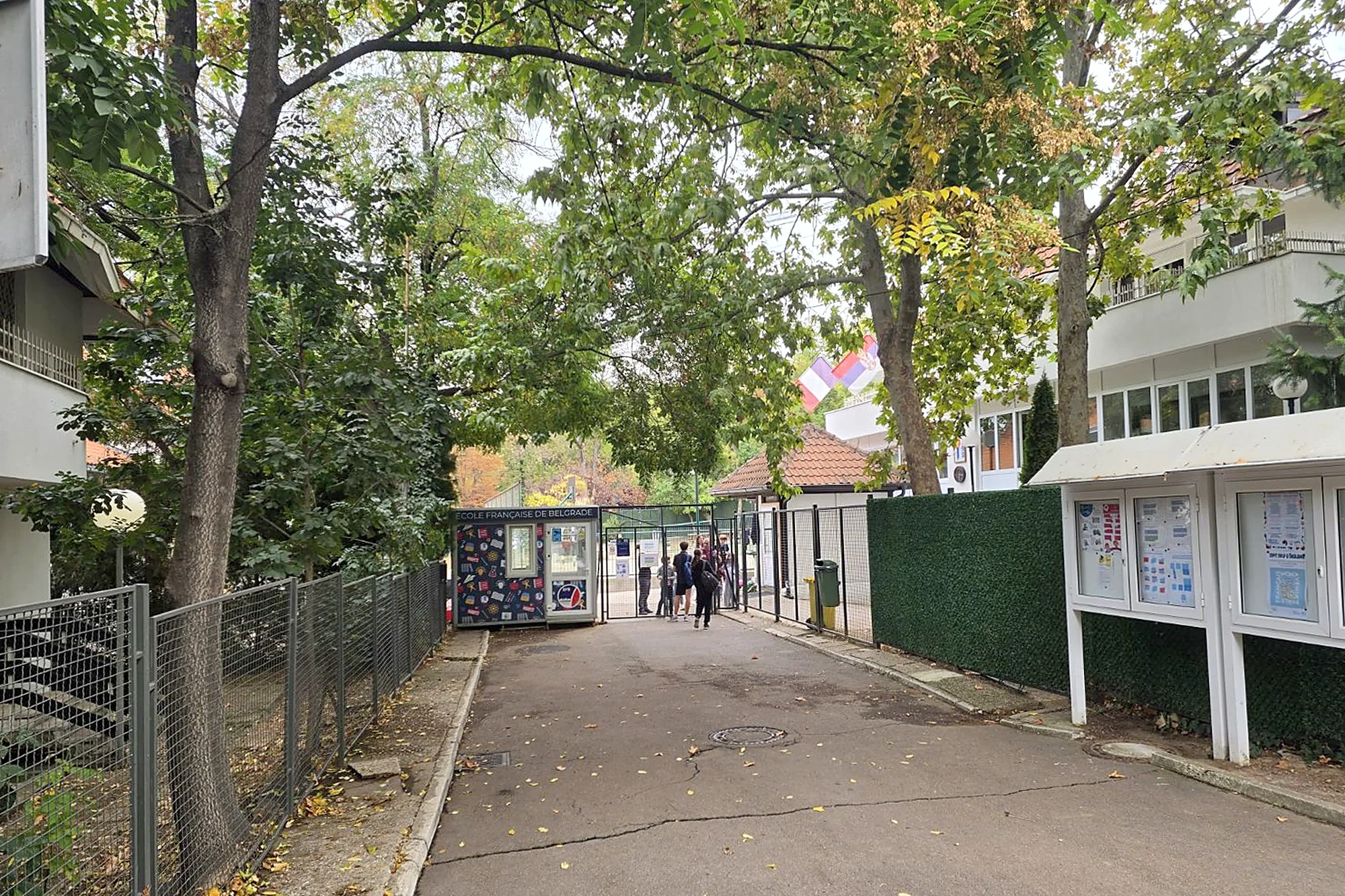
In Belgrade, Serbia, that responsibility was tested in court. In May 2023, a 13-year-old took two of his father's guns from a safe whose code he apparently knew and killed nine pupils and a school guard at Vladislav Ribnikar Primary School. He had practised at a shooting range with his father. In the 18 June 2026 retrial, the father was sentenced to 14 years and six months; the mother received 35 months. The judgment is not final, and both sides may appeal.
Thailand, as an example, has an estimated 10.3 million civilian firearms, around 15 per 100 people, the highest rate in Southeast Asia. Its licensing system does not currently require mental health screening or periodic reassessment of licence holders. Within hours of the Debsirin shooting, Prime Minister Anutin Charnvirakul promised a law restricting who may carry firearms in public, but gave no details of changes to ownership requirements. The weapon used at the school came from a private home. Storage and the responsibility of the licence holder belong in the same discussion.
AFTER THE HEADLINES
Some perpetrators spend months or years studying earlier shootings, borrowing language and imagery and comparing death tolls. Finnish researchers Jenni Raitanen and Atte Oksanen have described an online subculture of individuals who are interested in carrying out similar attacks. After the school shootings at Jokela and Kauhajoki in Finland, a separate Finnish study recorded a wave of threats and copycat behaviour, though a later National Institute of Justice study found little evidence that the volume of coverage drove further attacks. Education Edit has chosen not to name the student. Repeating a perpetrator’s name, photograph or tactics adds little to public understanding and may supply the recognition sought by people studying earlier attacks.
From 10 to 14 August, classes at Debsirin Nonthaburi were suspended. Mental health teams were due to visit affected students at home and continue their work after classes resumed. The school was scheduled to reopen on 17 August. Its staff would return without five of their colleagues.
This article deals with bullying and suicide. It also describes machinery: reporting, assessment, follow-up, a trained team and a person who holds the case. All of it begins when somebody notices, or after the crime if nobody was looking.
What happened to us, to our children, to the community? Perhaps we traded much of it for individualism and convenience. Shared courtyards became square footage. Prosperity gave children rooms of their own and doors we were taught to leave closed. Not to disturb their privacy. To let children choose how to spend their time. To give them space. Nowadays, meals arrive at the door, bills pay themselves, a screen answers almost any question, and none of it has given us more family time. Sadly, we live in times when a child can spend a week watching videos of school shootings behind a closed door, in a house full of adults.
Maybe we adults need parental training, a “factory reset” of the way we raise children, to restore the original settings and bring back the true values: spending time with our kids, talking to them and making sure they feel safe telling us just about anything.
SOURCES
US Secret Service National Threat Assessment Center, Protecting America's Schools, 2019
US Secret Service National Threat Assessment Center, Averting Targeted School Violence, 2021
US Secret Service National Threat Assessment Center, Enhancing School Safety Using a Threat Assessment Model, 2018
UNESCO, Behind the Numbers: Ending School Violence and Bullying, 2019
Fiedler et al., "Teacher and Peer Responses to Warning Behavior in 11 Cases of German School Shootings", 2020
Diliberti et al., The State of Behavioral Threat Assessment and Management in K-12 Public Schools, RAND, 2025
Smart et al., The Science of Gun Policy, RAND, 2026
Raitanen and Oksanen, "Global Online Subculture Surrounding School Shootings", 2018
Lindberg et al., "The copycat phenomenon after two Finnish school shootings", 2012
Towers et al., "Contagion in Mass Killings and School Shootings", PLOS ONE, 2015
Fox et al., The Contagion of Mass Shootings, National Institute of Justice, 2021






.avif)


