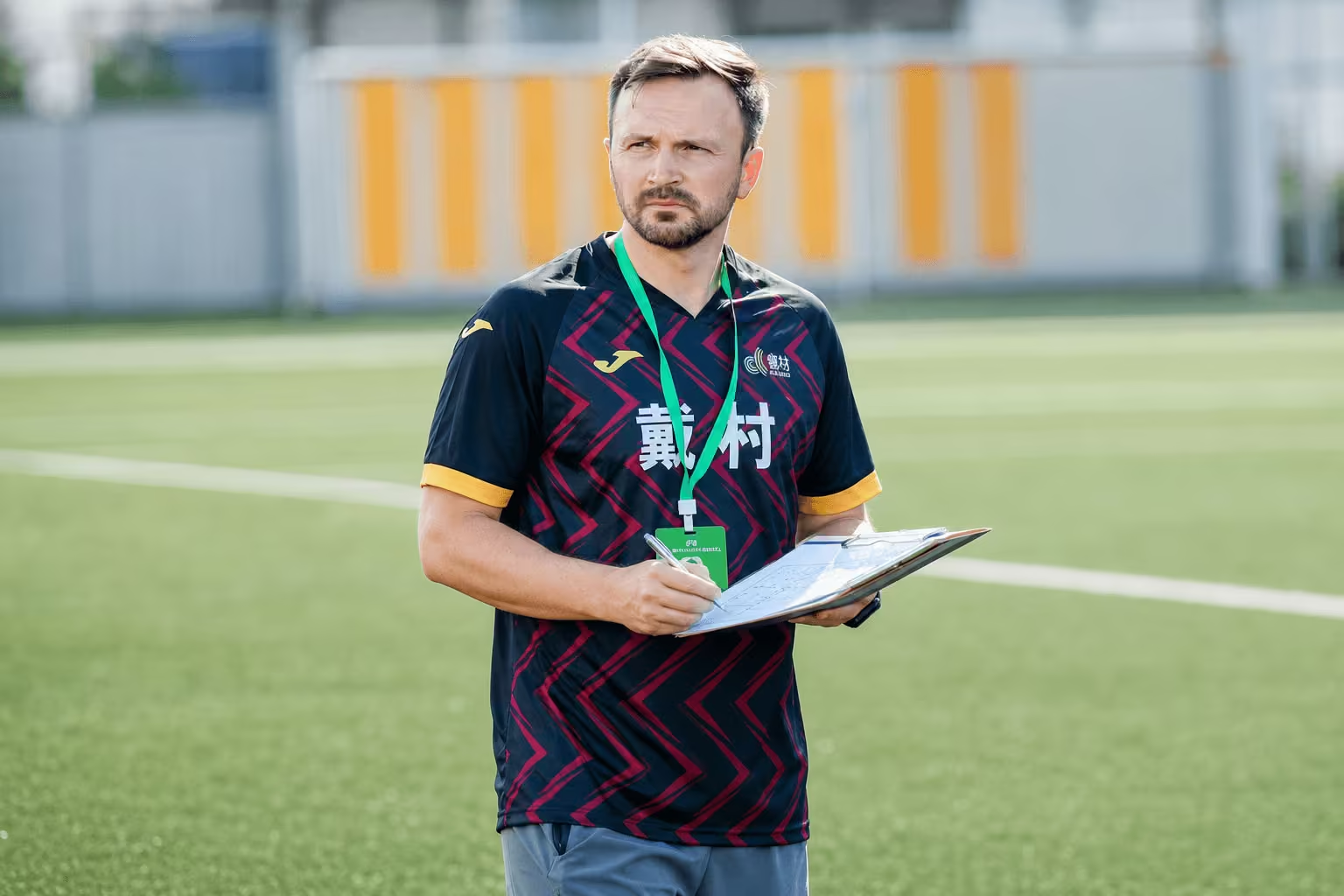
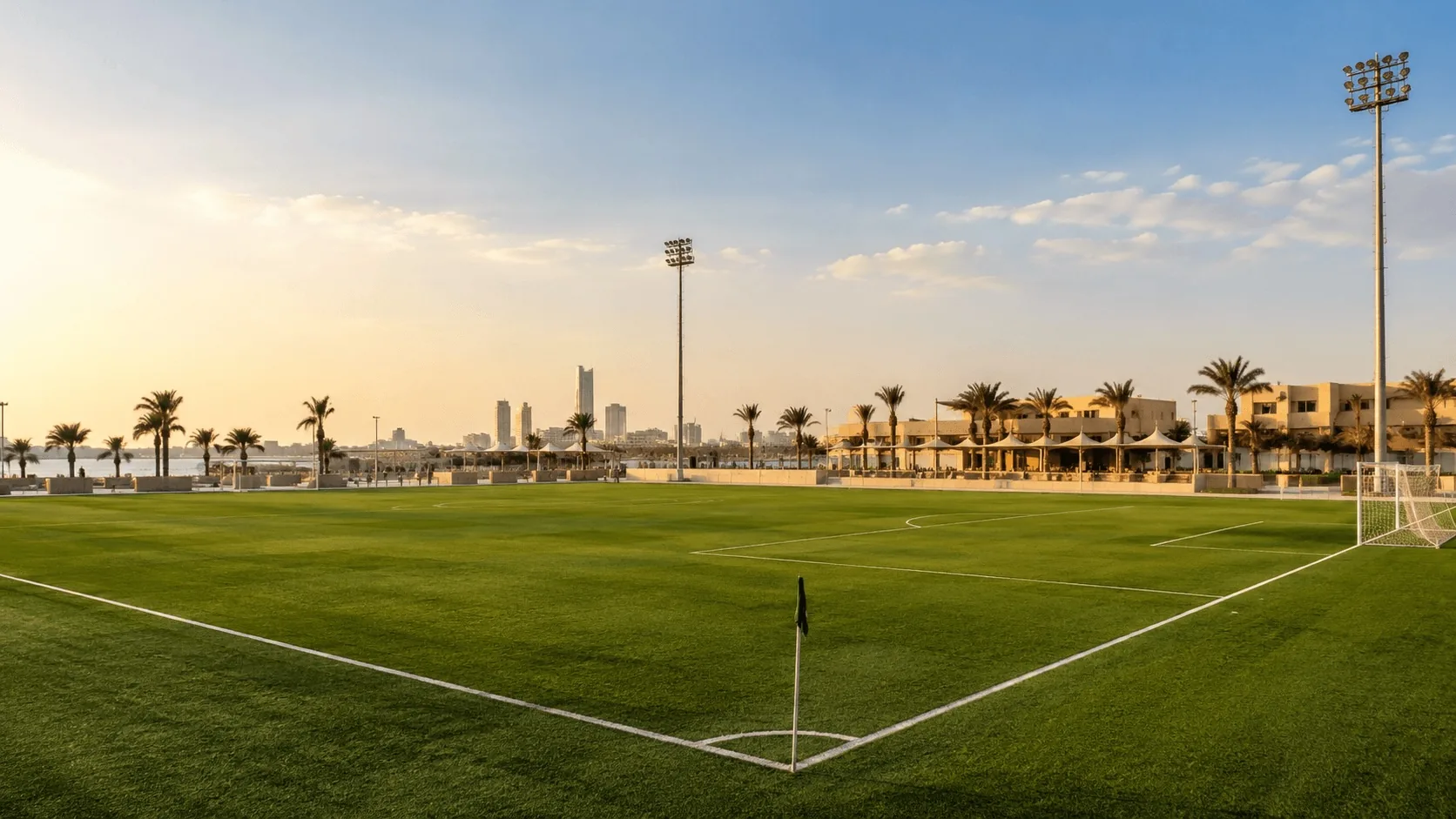
As Head of Physical Education and Sport at Nün Academy in Jeddah, Aandré Wessels has spent several years building programmes that tie physical education to school sport. He has widened inter-school competition, developed physical literacy, opened new curriculum pathways, and pulled schools closer to the region's sporting bodies.
With educator and school sport leader Raymond Garnett, he writes about the founding of the Jeddah Inter-School Sports Conference (JISSC), a non-profit entity run by its member schools. It aims to bring schools together through sport that is structured, inclusive and run with a purpose, with teachers, students and federations pulling in one direction rather than several.

"Who won is the easy question. The harder ones come after. Who grew. Who belonged. Who led. Who found that movement might become part of a good life."
In Saudi Arabia, Vision 2030 and the Quality of Life Program have invested in health, wellbeing and youth participation, and schools play a part in this. A school is where a child picks up habits, tries on an identity, learns whether they belong.
Where it came from
For years, schools worked in parallel but rarely together. Each had teams, a calendar of fixtures, a teacher or two who cared a great deal, but there was no way for them to meet, play regular fixtures, and learn something from other schools across town.
JISSC has closed that gap. The fixtures were easy to organise. Harder, and more interesting, was shifting how physical education was regarded, and establishing a standard for access and inclusion. School sport had to serve two children at once. The one chasing selection. The one hanging back by the wall
Vision 2030
Vision 2030's focus on quality of life, health, giving young people somewhere to belong and something to aim for also runs through the goals of JISSC. The Saudi Sports for All Federation has pressed the same point: physical activity should sit within reach of ordinary people, across the whole of society (Saudi Sports for All Federation, 2024).
JISSC's work widens who gets to play, girls and boys alike, and ties what happens in a school gym to the national pathways above it. The real change is cultural. Sport stops being an add-on and becomes part of how a city raises its young.
What membership asks
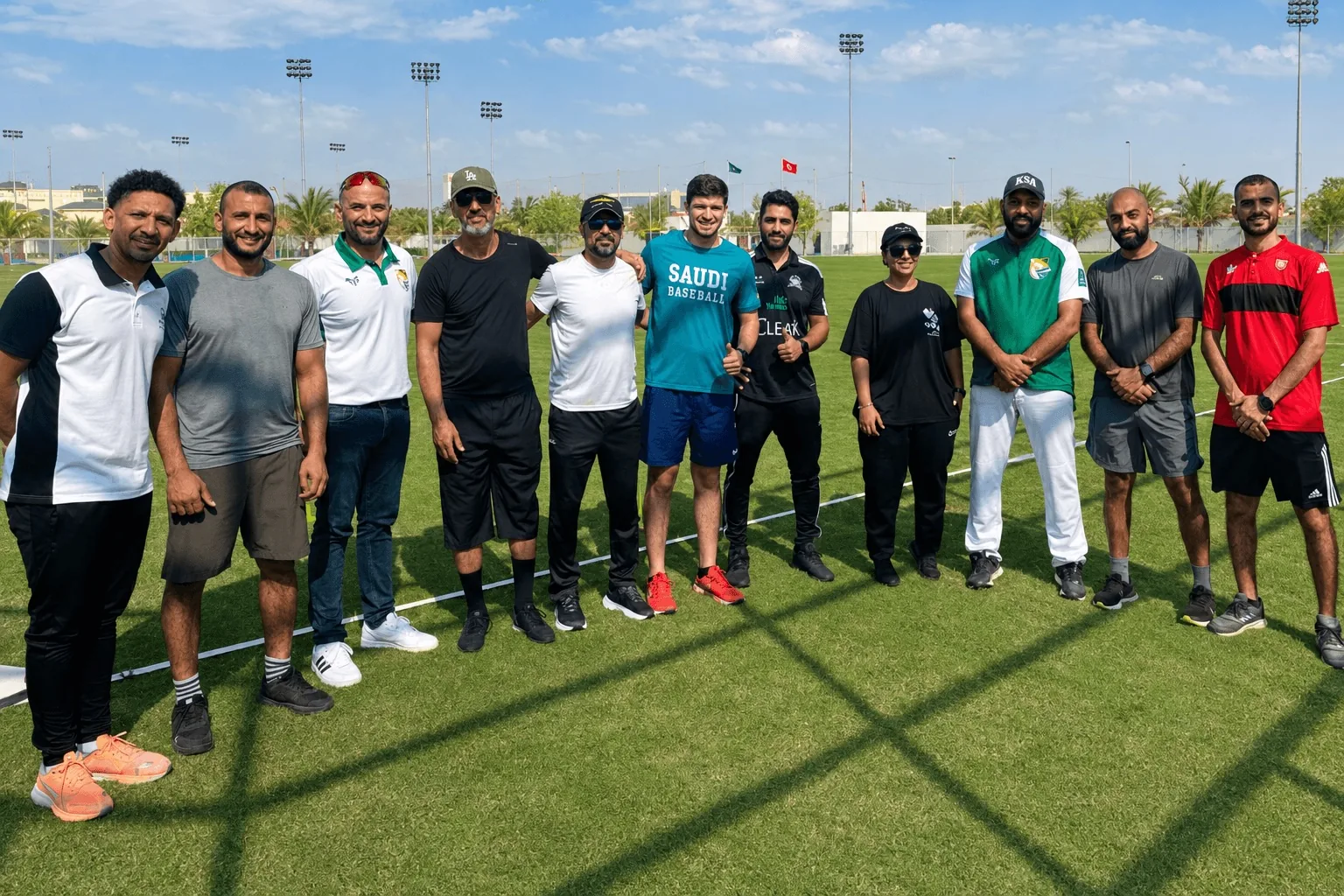
Membership comes with specific obligations, and each school has a representative who goes to planning meetings, hosts or co-hosts events, and signs up to a shared code of conduct. The effect is accountability. The quieter effect is company. A teacher who used to run sport alone now has colleagues across the city.
There is a theory behind this. The OECD Learning Compass 2030 names wellbeing, agency, values and competencies as the aspects a future-ready education has to develop (OECD, 2019). Organised well, school sport can feed all four.
The teacher's part
Strip the system back and the teacher is what remains. Pitches, fixtures, federation deals all help but do not teach a child about teamwork or resilience or respect. Those have to be taught, shown, and talked over afterwards.
A teacher does several jobs at once: designing what is learned, setting the culture, keeping the weakest player involved, reading the whole child. This is why professional development matters. Workshops led by federations, teachers swapping methods, training in a single sport, sport threaded into the curriculum: each lifts the quality of what happens on the ground.
There is a body of pedagogy behind good PE, and what its models share is a refusal to let children go through the motions. The aim is for a child to understand the game, to take some ownership of it, to find themselves inside it (Casey and Kirk, 2021; UNESCO, 2015).
The federations
Federations are JISSC's other lever. They bring trained referees, coaching know-how, teacher training, and an eye for talent worth following. They tie the school game into the larger structure of Saudi sport.
There is a temptation to measure that link by how many future internationals it produces. That misses the point, since most children will never go on to pull on a national shirt, but they can become an adult who keeps moving, a steady teammate, a coach somewhere down the line, a parent who thinks sport is worth the time. Physical literacy is the proper name for this.
Winning and losing
For this to work, it comes down to culture. JISSC asks its schools to demonstrate respect, fair play, inclusion and honesty for a very clear reason. Sport puts children into situations that test all of those traits.
The lessons learned will outlast the score. How to win without gloating. How to lose without falling apart. How to back a teammate having a bad day.
What comes next
JISSC is young and has room to grow. Membership can widen. More sports can be added. Federation ties can deepen. Governance can be put on a footing that lasts, and the data can get better.
The data matters. Track who takes part, ask the students their opinion, look hard at each event afterwards, and a school starts to see who it is reaching and who is slipping away. A serious system counts more than trophies. It counts how many children played, how many teachers became better at the job, and how many families stopped treating PE as a break in the day and accepted it as part of education.
The fixtures continue to expand: more friendly Saturday games, more one-off tournaments, more regular matches between member schools. Next year, an under-18 league will be launched for football, basketball and volleyball. The professional development programme is growing, with more being led by the federations. A JISSC newsletter will be published, with an academic journal alongside it. JISSC's benefits are easy to see. Schools are stronger joined up than scattered.
Saudi sport will be built in the obvious places, the stadiums and the academies and the performance centres. It will also be built somewhere less photographed: a school gym on a Tuesday, a marked-out playground, a pool, a stretch of field where a child works out what the body can do. A country serious about an enduring sporting culture has to include its schools in the national plan, and back its PE teachers as the people to lead it.
Reference List
Casey, A. and Kirk, D. (2021) Models-based Practice in Physical Education. London: Routledge.
OECD (2019) OECD Learning Compass 2030. Paris: Organisation for Economic Co-operation and Development.
Saudi Sports for All Federation (2024) Sports for All Strategy. Riyadh: Saudi Sports for All Federation.
UNESCO (2015) Quality Physical Education: Guidelines for Policy-Makers. Paris: UNESCO.
Vision 2030 (2026) Quality of Life Program. Kingdom of Saudi Arabia.
About the Authors
Aandré Wessels teaches physical education in Saudi Arabia. He works on building sport programmes from the ground up, on PE pedagogy, and on teacher development. Find him at linkedin.com/in/aandrewessels.
Raymond Garnett is an educator and school sport leader working in school sport structures that widen participation, support teachers, and bring in the wider community.