
.avif)
Vancouver Island. The edge of the ocean. This is where Brentwood College School has been doing things right for a hundred years. The question is how, exactly.
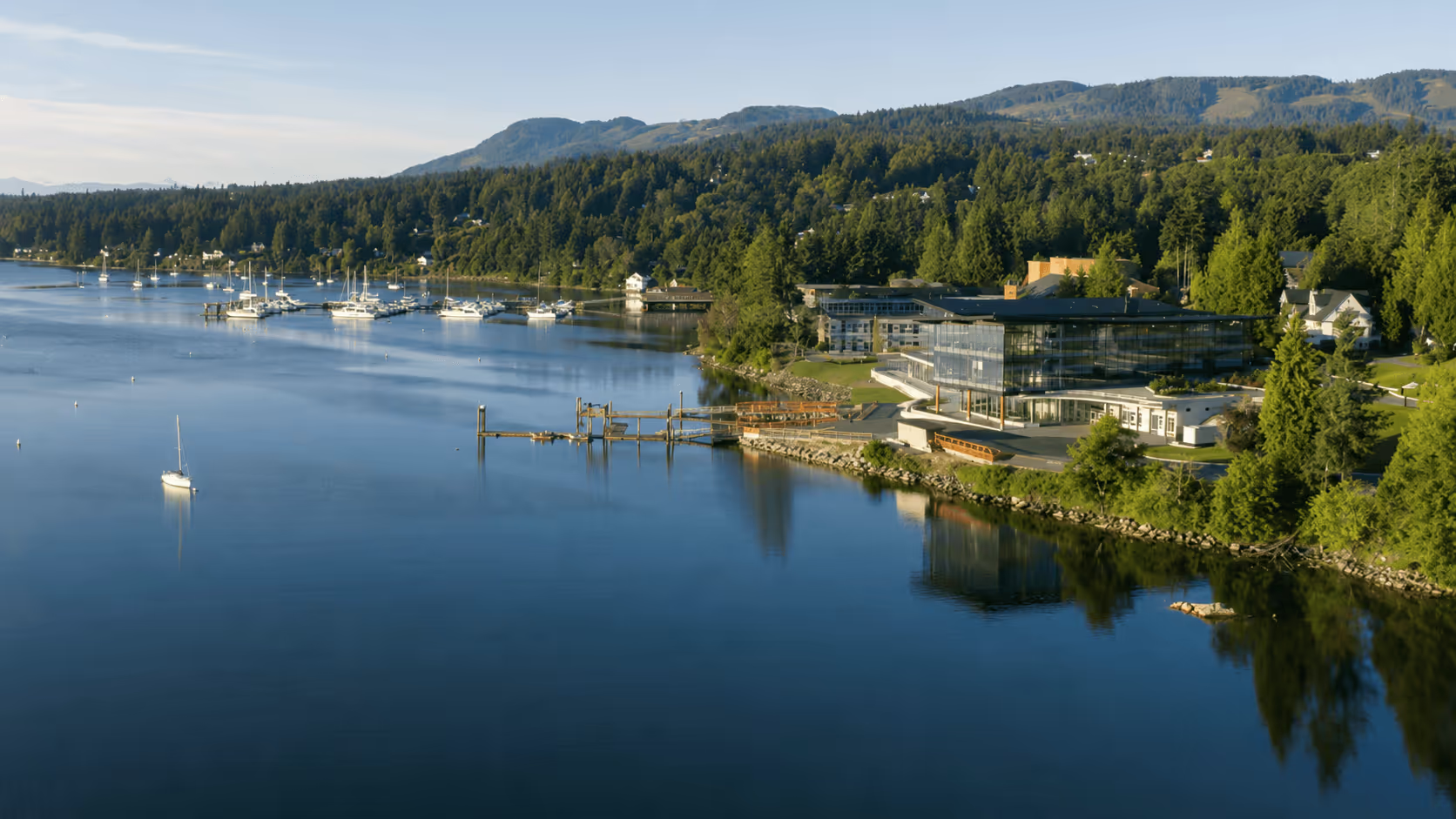
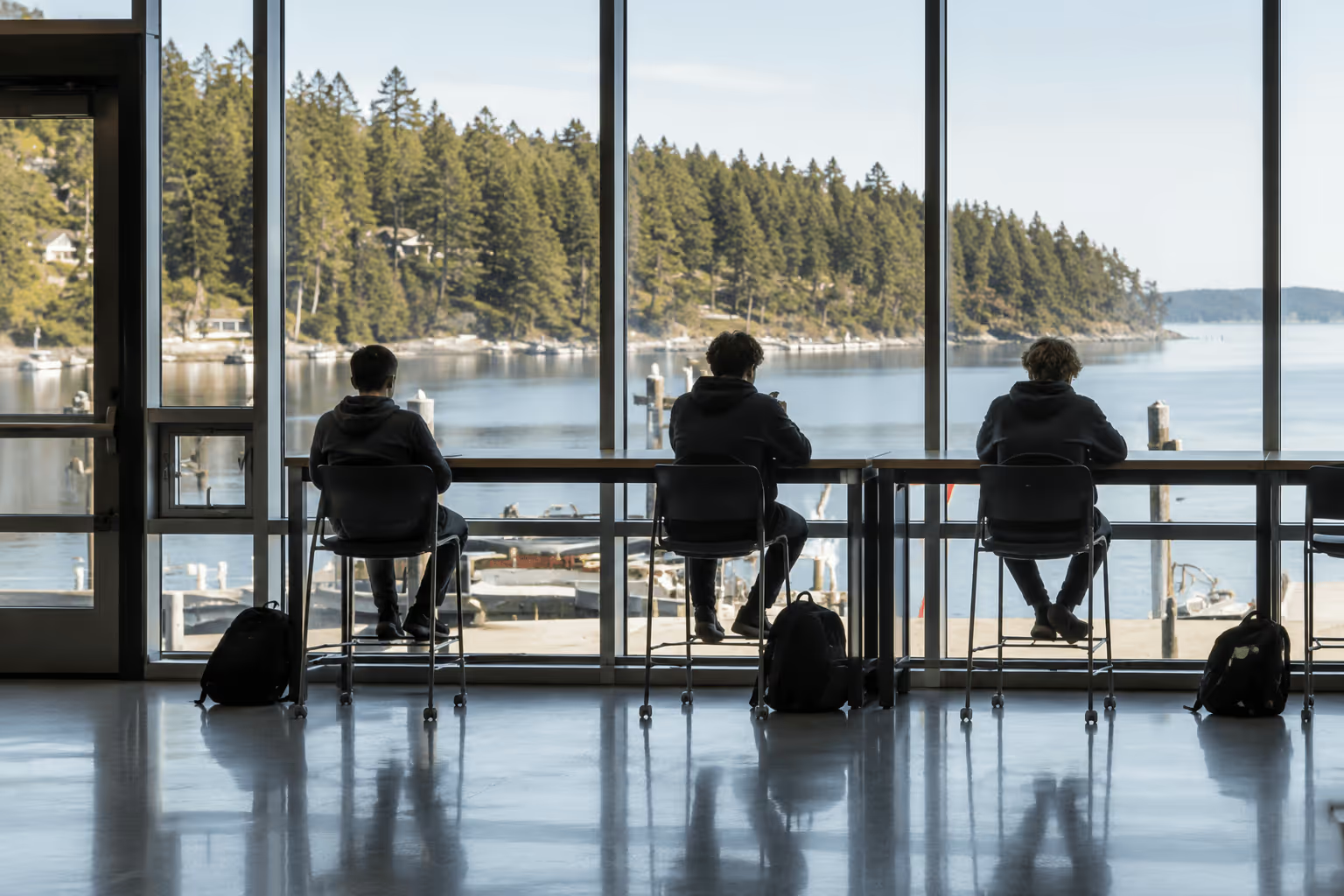
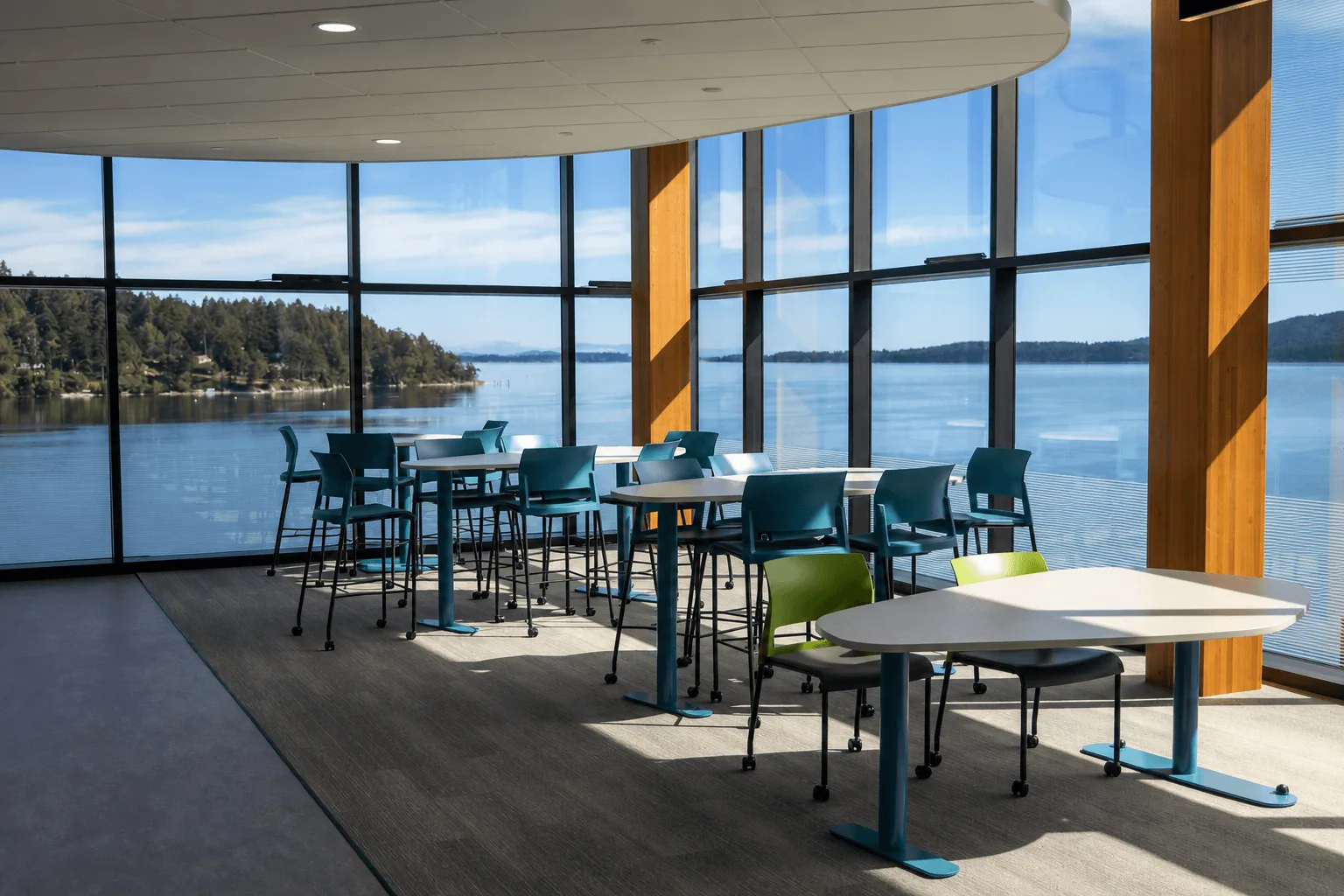
The school has around 520 students, 80 percent of them boarders, drawn from all over the world. Many follow a parent or an older sibling through the same gates, and expectations run high. Old-growth forest frames the back of the campus, and the Saanich Inlet opens out in front, where orcas pass and dolphins surface between the rowing shells during afternoon practice. Glass-walled classrooms face the water, so a student in the middle of an equation can stop and watch a seal climb onto the shore below.
But if you ask a former student why they keep coming back, it is never because of the view. It is always a teacher. Or a coach. Or a dorm parent who was kind and supportive.
I spent two years at Brentwood as a drama teacher and senior play director, so I knew regatta weekend was the time to visit. From early morning the place is festive and alive: the music, the stalls, the smell of food along the green. The music students play between heats while other students sell food, each team giving a share of what it makes to a charity of its own choosing. It is a wonderful outing for families, a chance for parents to catch a glimpse of their champions on the water and get a good photo of it all, the snow still on the mountains across the inlet like a backdrop on a poster. This is Brentwood at its proudest.
I sit down with Ian McPherson, Director of Advancement and Communications, and ask him what makes this place what it is.
When students and families visit, what do they usually notice first?
Most people first hear of the school from word of mouth. But hearing about it is one thing; seeing it is another. I enjoy seeing the moment when families take in the surroundings for the first time.
We try to meet the expectations we set during admissions, but it works both ways. We also want to be sure the school is right for the student, and that they are ready for it. A student can be right for Brentwood and still not be ready for it.
And what about the first day of school?
The first day is full of emotion, for parents and students both. Our job is to make them feel welcome and to give them what we promised during admissions. We have orientation assistants who help with the transition and become an anchor point whenever a student needs one. The most important thing is that a student feels welcome and supported.
This place is beautiful, but it is also intense and quite self-contained. Does it create a bubble?
Above all, this is a safe place. Safe, but open, and the layout shows it. Many boarding schools are built inward, with the buildings facing one another around a square, closing the students off from what lies outside. Brentwood was built the opposite way, every building turned out toward the water, the mountains and the hills. It was a deliberate choice, and it reminds the students every day that there is a world beyond the campus.
Beyond that, the trips and tours take them off the grounds through the year, and the world comes to them in return. Our students come from dozens of countries, bringing their cultures and their points of view with them, and they learn from one another face to face, through games, events and what happens in class.
A teacher here is rarely just a teacher. They are coaches, mentors, sometimes almost like parents. Does the school hire people who are already that way, or does the place shape them?
A bit of both. Some arrive already wired that way, others grow into it over time. Either way, teaching at Brentwood is a vocation, and it does not stop at the classroom door. It carries on out on the sports field, in the art studio, in the hours spent with students after class. Watching a student change, catching the moment something finally makes sense to them, that is what keeps a teacher going.
Do students change here, and if they do, how does that happen?
A colleague once said in an assembly: "You students at Brentwood are now blank canvases. You can be the best version of yourself. No matter what happened before you came, this is a fresh start, a clean slate to learn about yourself. Reinvent yourself through choosing and deciding."
That is what happens, but only for the students who are all in, who jump in with both feet. Boarders experience this most fully, because they remain inside the life of the school around the clock, the sports, the arts, the long evenings, the time spent with one another. Day students share much of it, but they go home at the end of the day.
What if someone is just a little off, a student who has gone quiet, a colleague who seems distant, even if nothing has been said? How does that get picked up, and what does support look like in practice?
Being a teenager is often a lonely time. Everyone here is in the same boat, and there are bound to be moments when a student needs more attention. Brentwood is a tight community, so the peers are usually the first to notice, then the residence, then the advisors and coaches, in conversation or at a check-in. And we have the health centre, with nurses trained in mental health. Every student should be known and looked after, and that matters to us more than anything.
For staff it is harder. Most teachers have lives outside the school, and the school does not see them the way it sees the students. We rely on each other instead. There is no harm in asking a colleague if they are alright, and this is one thing we could do better.
How did you find your way into this role, and how has working in a school like this shaped you?
I started as a marketing consultant, and at Brentwood I first became Director of Communications. I knew I would stay. From the start it felt like I was helping build something, and there is no end of ways to do something for the kids. Brentwood gets into your DNA.
The real challenge is balance, knowing when you are taking on too much. Spread yourself too thin and the first thing to suffer is the relationship with the students, and that is the one thing a school cannot get wrong, because once that breaks, everything else follows. You see the proof in the alumni, in how many come back year after year and then send their own kids here.
Has there ever been a moment when you had to make a call that not everyone agreed with?
People will not always agree with you. You need to know that you used every tool you had, that you thought it through as well as you could, and that you are willing to live with the consequences. I work mostly in administration and alumni relations, so I am used to being on my own little island. But in the end you know it was done with the best intentions.
When someone reads this in Education Edit, what is the one thing you would want them to take away about Brentwood that they would never find in a brochure?
You have to experience Brentwood to understand it. Parents and students look at the sports, the arts, the activities, and ask whether Brentwood is for them. It is a fair question. But the better one is what they are willing to give.

Walking back to the car, I think of Mr Patel, who was Head when I worked there. He turned up in the cafeteria, in study hall, on the sidelines of games, in the kitchen on Indian night making sure everything was right, as though there were several of him. That presence sets the example.

Author:
Ivan Nikolic
Published:
May 1, 2026
SHARE






.avif)
.avif)