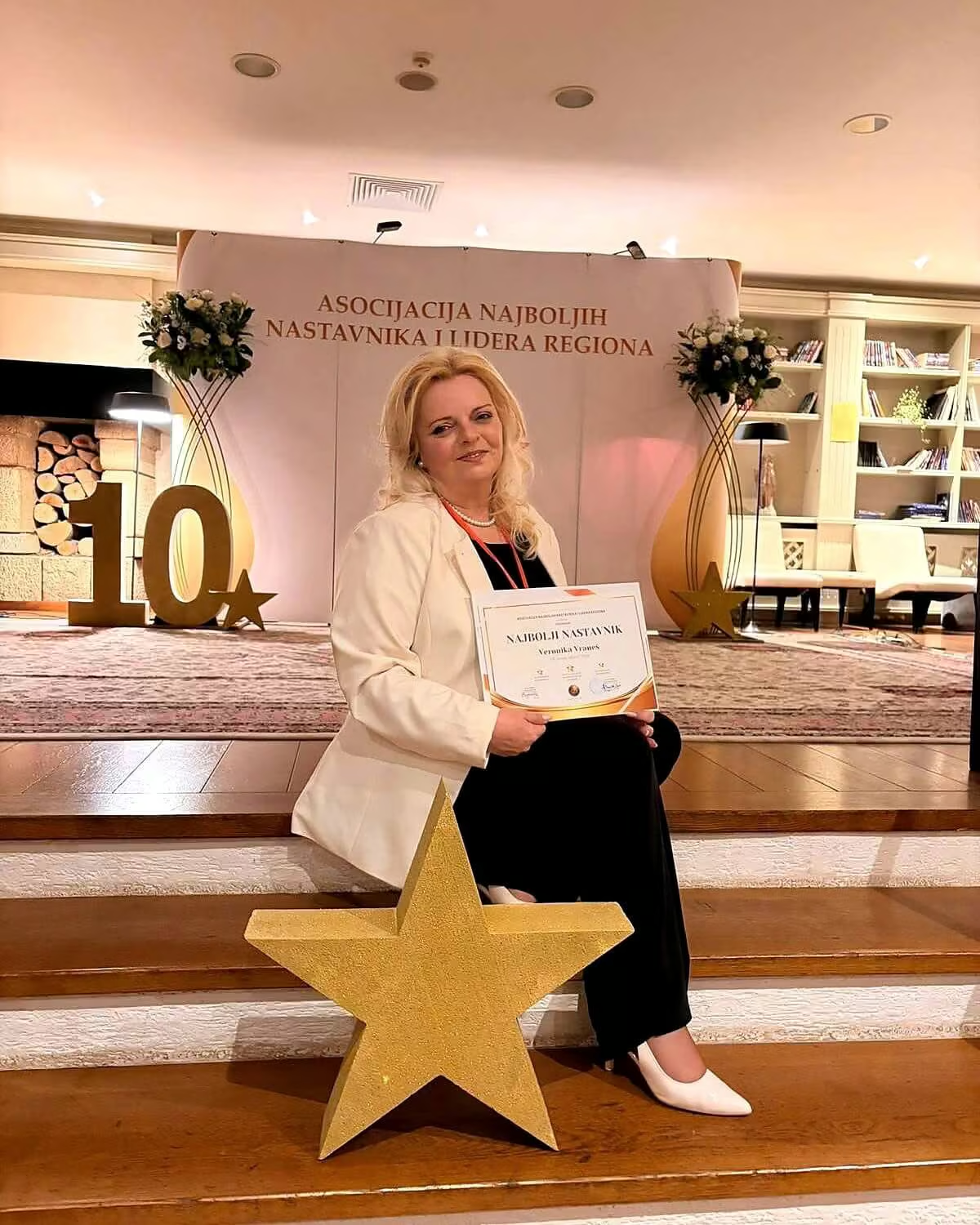
The first thing Veronika Vranes did after receiving the Best Teacher of the Region award was take it back to her class.
“I told them, look what we have won. We.”
There was applause, congratulations, tears of joy. She explained it simply: what the award was, what they had looked at, how it had been judged. The children understood. Their teacher had been recognised, but somehow the prize belonged to all of them.
Veronika Vranes is a classroom teacher at "Drago Milovic" Primary School in Tivat, Montenegro, and was recently named Best Teacher of the Region by the Association of the Region's Best Teachers and Leaders. The award was presented to her by Zeljana Radojicic-Lukic, one of the association's founders and a Top 50 finalist for the Global Teacher Prize. The same year, her school reached the final for the Lighthouses of Education award, and another colleague, Ana Braunovic, took the regional Iskra prize for her work within the teaching community.
One school, three honours in a single year. Clearly, Mrs Slavka Mirkovic, the headmistress, and her team are doing something right. The "Best Teacher of the Region" award was just the occasion, not the reason for this conversation.
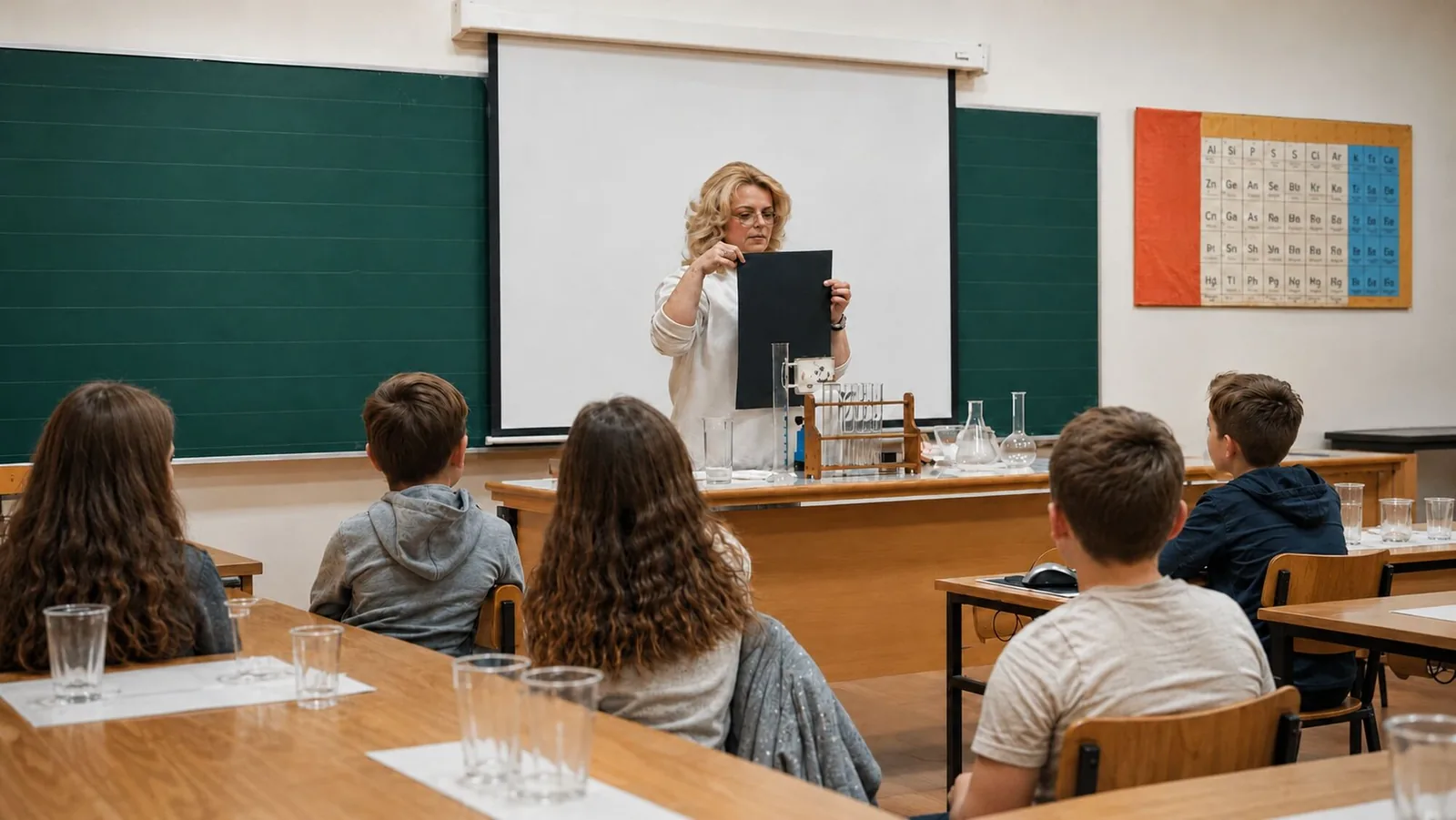
Born and raised in Bosnia, where she studied and worked as a teacher for twenty years, Veronika moved to Tivat seven years ago. As the family settled in Montenegro, she went straight back to the front of a classroom. A mother of three, a wife, a daughter, a sister, she holds a master's degree in primary education; she is a music teacher, a librarian, and many other things. But when she walks into a room full of curious children, she is simply a human being and nothing more. Her day runs in two shifts, with twenty-five children in the first and twenty-five in the second. When the last bell goes, she stays on, teaching literacy to children from the Roma settlements nearby. Thanks to her work with the Association of Egyptians in Tivat, which also reaches Roma young people, several have finished secondary school and a few have gone on to university.
This is her last year with the class she taught for five years. The time has come to let go, and the feelings are mixed.
"I am happy and I am sad at the same time," she says. "I give my all, I teach them the same as my own children: how to be decent. What matters. How to treat another person. They are all my kids! My Masas, my Saras, my Nedas, my Janas... I deeply believe that the learning environment has to be loving and safe. Children can really learn only when they fully trust you. They are small people, and respect is where I begin with each of them. I try to stand where they stand, to understand the point of view of a six- or seven-year-old."
You came back to school with the award. Has anything changed since then, in how your students see you, in how the parents speak to you?
"It meant the world to us to have our work recognised on such a scale. The children saw that what we do together matters. And then the whole class was clapping, some of them in tears."
She said her classroom is always full of emotions, and mostly she is the one who shows them first. They cry, they laugh, they are sad and happy. Together.
"I teach my children to live their feelings, not to hide them or be ashamed of them," she says. "And the best way for kids to learn is to lead by example. I choose not to play a perfect role-model teacher. I would rather they see me as a human being who is alive and real."
After five years teaching the same class, she can totally read her students. She can tell who is hungry, who needs a moment to step out, who needs a break, often before they do. A hand goes up, two fingers raised. How do you know what I want? they ask her. Well, I just know. Usually around this time of day you get peckish.
Her students share their food and snacks. They look after each other.
Just yesterday, a girl in her class named Jana called her "mum," and it was not by accident.
"She called me the person she trusts, the one she feels safe with," Veronika says. "And when a child comes to me and says, teacher, let me tell you something, but please don’t tell anyone. That trust leaves me prouder than any award ever could."
Many teachers struggle with behaviour management; they say it is where most of their energy goes.
"I hear it from my colleagues all the time," she says. "The children are restless. They were impossible to teach today. I say: they are restless because they are bored. I am bored myself, teaching new generations from lesson plans that are ten, fifteen years old. So I get them to pack their bags, books, water, sandwiches, we are going outside. We take the cable car up, we sit in the grass, they climb, they get their clothes dirty, sometimes they even tear them. So what? We will patch the hole in the tracksuit, that is the easy part. How else are they supposed to learn?"
She keeps to the curriculum, though she teaches it in her own way: bold, brave and effective. Or she invents a different approach. The project "Happy Learning for a Society of Values", built on the Happy Learning methodology developed by Zeljana Radojicic-Lukic, is one example. For a month, a team of teachers works on one virtue, persistence, say, woven through every subject, with staff and children taking part together.
"You should see how endearing it is when a maths teacher demonstrates persistence by doing push-ups in the gym," she says, laughing. Her colleagues turn creative, and the children even more so.
How do you get on with colleagues? Do they like and support your ideas?
"I do not understand how they put up with me," she says, laughing, "but they are super supportive. Or maybe they just do not want to see the other Veronika... just joking! We get on well. But do not get me wrong, I know how to say no when I have to, and they respect that."
And what about the school leaders? Your headmistress, is she behind all this?
"I have always had headteachers who stood behind me. But Slavka Mirkovic is in a class of her own. Nothing in this school gets past her, and that is exactly why all of us can do our work."
The best teachers need a leader standing quietly behind them, taking responsibility for their wellbeing.
And the parents? It is a small community; you see them all the time, inside and outside of the school.
"The school invests a lot in professional development. For sure, we teachers need to know the latest trends and keep up. But sometimes I ask: what about the parents? They could use some support too. If we want to do it right, we have to do this together, at home and at school. By the time a child reaches my classroom, the behaviour is already set at home. The most important work a parent can do before sending a child to school is to teach them values and manners. That is the foundation. The rest we build on top of it. The reading, the writing, the times tables, that is my job. I always tell the parents: respect your child. Sit and talk with them. Try to see things through their eyes, understand where they stand. A child is not your project. Every child has its own personality, their own ideas, their own way of seeing the world."
So you make better parents out of the parents as well.
"If you say so," she says, laughing. "I see them as friends, colleagues. We are on the same mission, and we all have to pitch in if we want to succeed."
What about a challenging student, a child who learns at a different pace? Is there any support in place, a teaching assistant, language support? How is that regulated in a school in Montenegro, who provides it?
"Every child learns differently, and some have additional needs that require more patience and more invention. For me, that is part of the work, perhaps the most demanding part, and it is where I find the deepest purpose in what I do. The support is meant to exist, but it sits outside the school and depends on the Ministry to fund it. The assistants were approved only this year. I had a child on the autism spectrum I taught on my own for four years, and I managed somehow. He came into first grade and for two months he did nothing but scream and throw whatever he could reach. So I bought the plasticine myself; while the other children wrote their numbers with a pencil, he shaped his out of plasticine and clay. It turned out he had a real gift for mathematics. It is not always easy."
Where do all these ideas and all this energy come from? Is there a line where the work stops and you are simply a mother, a wife? Do you ever rest?
"Rest? From what? I never get tired of teaching, or of the time I spend in the classroom with the kids. The ideas come from staying present, fully there. I do not wait for inspiration to arrive; I keep moving, keep noticing, and the ideas follow. What tires me is the time spent away from it all, the holidays, the dull meetings, buried in administrative work. There is no line where the work ends and home begins, and I have never needed to draw one. I have lost count of the times I have turned to my daughters for ideas, and they pitch in with the fresh thinking of their generation. I am really proud of that; taking part in the process is good for them too, they become better people."
So your family is your rock? More and more children and adults are trying to build lives without much family ground beneath them. Does that worry you?
"True. My family is my inspiration and my strength. And yes, what you describe is something we see more and more. It saddens me. We need to return to our root values, or we will lose one generation after another."
This September you get a new generation to teach.
"I already know how it will go," she says. "The new ones arrive, the little first-graders, and for the first week I will feel almost angry. As if they were to blame for the familiar faces I miss, my fifth-graders, who have moved on without me. Every generation, it is the same thing. I cannot fight it; every time it catches me off guard. And then I will love them even more."
That is what makes this teacher so special: she cares.