
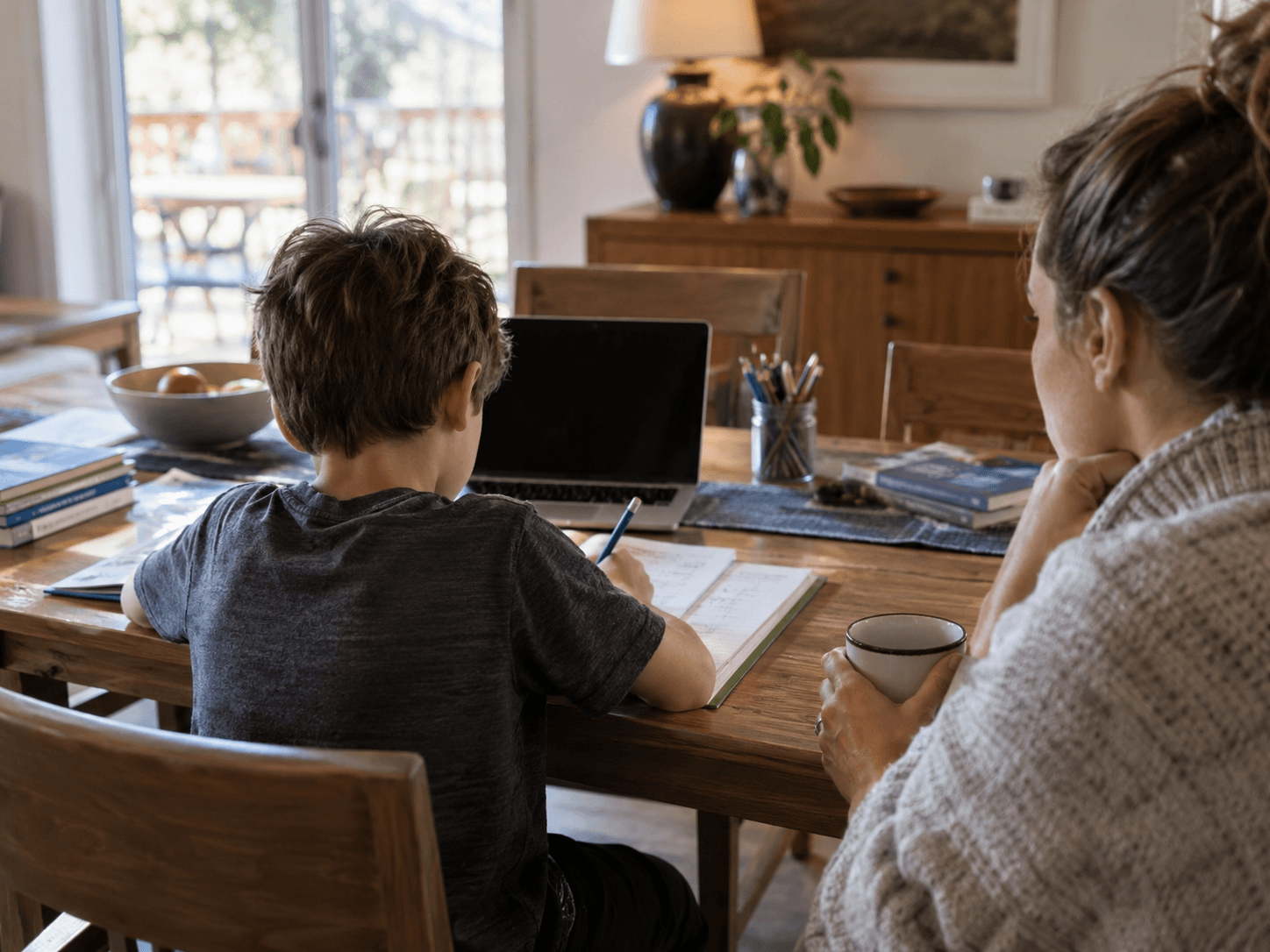
There is one question that keeps returning to me after years of working with children and parents: where does our responsibility end and the child's begin?
A parent should protect their child, help them, stand beside them. But in everyday life the line between helping and taking over can be very thin. If a child does not know how to approach their homework, we can help them understand the task, or we can do it for them and they get a good mark without the experience of having solved the problem themselves.
It is the same when a child has a conflict with a teacher. We can listen and help them think through what they might do, or we can call the teacher ourselves and settle everything on their behalf. In doing so, we take away the chance for them to learn how to speak up for themselves.
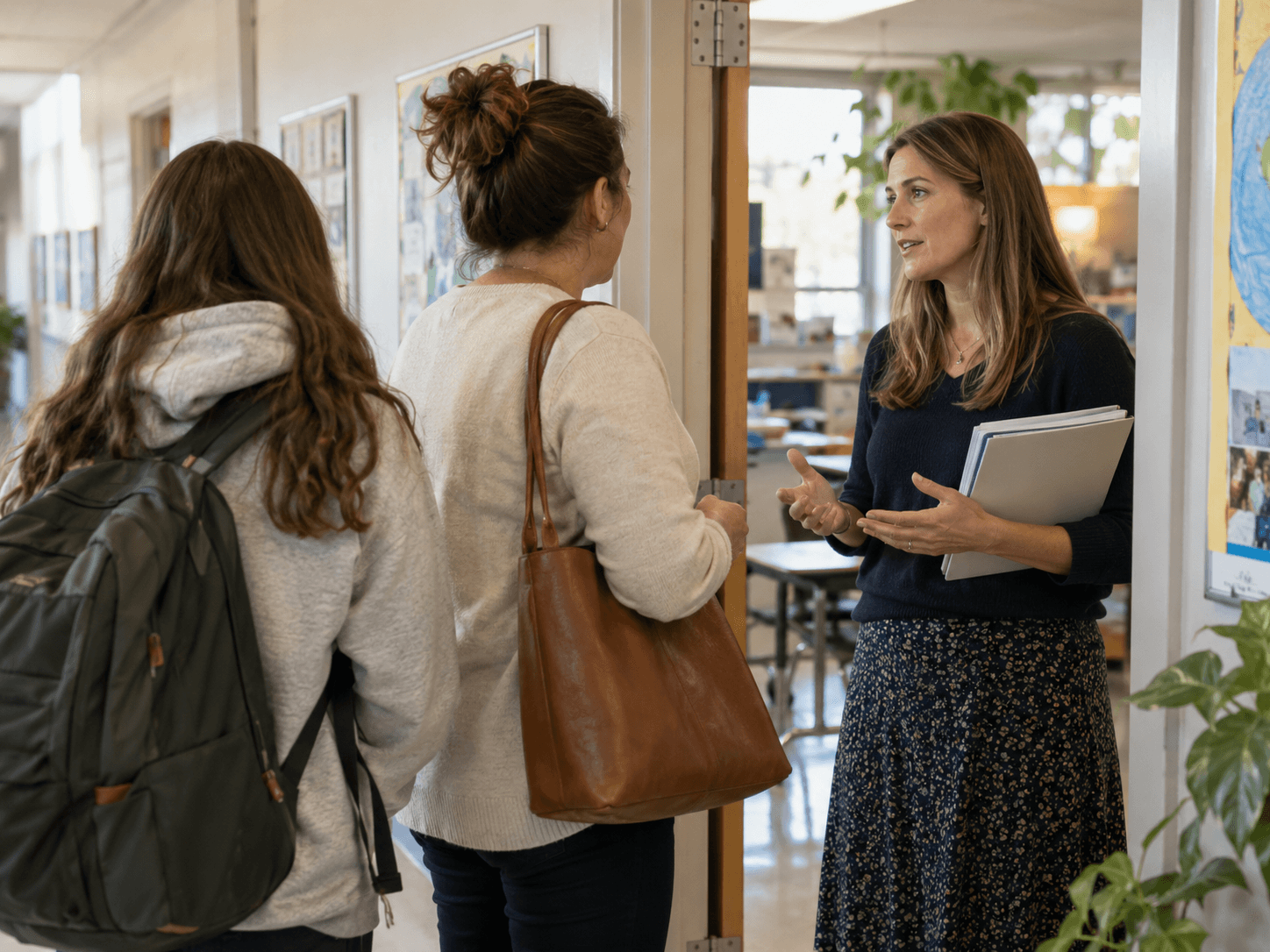
I still remember one case from my work as a school psychologist. The girl was in her second year of secondary school. Her parents were divorced, and she lived with her mother. The mother was educated, ambitious and very involved. She was a psychologist herself. But with her daughter she was demanding and controlling. She set firm boundaries and left little room for the girl to make her own choices. For a girl of that age and temperament, those boundaries had become too tight.
The girl began to idealise her father. She saw in him the warmth, closeness and leniency she felt were missing at home. She imagined being closer to him, moving in with him and his new family.
Her mother was firmly against it. She believed the father was not involved enough, was inconsistent and too permissive, and that he would not be a good influence on her upbringing. After long conversations with the girl, I supported her wish to go and live with her father. It was not without risk, but I felt the risk was manageable. Both families were reasonably functional, and I had contact with both and could follow the situation.
Why did I feel she should go? Because I believed her need to be with her father was no longer something that could be talked away. She idealised him, and she needed closeness with him. I believed that direct experience might help her see him more clearly. She needed to get to know him through her own life, not through her mother's account of what he was like.

The mother was furious. She came to the school to meet me and reprimand me, and blamed me for her daughter leaving home. Behind her anger I could see her fear of losing her child, and how hard it was for her to let go of control. After several conversations, she eventually agreed to let her daughter go.
It quickly became clear how different reality can be from our picture of it. The girl got to know her father properly. She saw his good qualities, but also his shortcomings. The idealisation began to fade.
Life in the new family turned out to be far more complicated than she had imagined. Relationships with her half-sisters, everyday obligations and different house rules began to reshape her expectations.
After roughly six months, she went back to her mother. She was more mature, more realistic. The conflicts between them grew less frequent, and the relationship began to mend. What she had not been able to see before, her mother's effort, care and sense of responsibility, she could now recognise from another angle.
No explanation from her mother could have shown her that. Only experience could.
That story has stayed with me because it shows how difficult it can be to tell protection from control. The mother was not a bad mother. She worried a great deal and tried hard. But at a certain point her concern left too little space for her daughter's need to experience something for herself.
Of course there are situations in which adults must intervene, when a child faces something beyond their understanding or control. But many situations are different. There the child needs a parent who stays close while they work through the problem themselves.
A parent sees their child at home. A teacher sees them in the classroom. A school psychologist often has the chance to see them somewhere between those two worlds.
The parent says: "He is completely different at home."
The teacher says: "In class he doesn't show that he's struggling."
The psychologist may see a child making an enormous effort to look as though nothing is wrong.
A child who refuses to work may not be lazy. A child who argues may not be rude. A child who keeps asking for help may not be incapable.
Parents and schools should not compete over who is right. Their task is to try, together, to understand what the child actually needs. Sometimes that is help, sometimes a boundary, sometimes simply room to move.
In the case of that girl, she needed to leave in order to come back. She needed to get to know her father in order to stop idealising him. And her mother needed to take a step back so that the two of them could later take a step towards each other.

Vesna Stevanović studied psychology at the Faculty of Philosophy, University of Niš. After fourteen years at a neuropsychiatric clinic, she moved into education, working as a psychology teacher and school psychologist at Prva niška gimnazija "Stevan Sremac".







.avif)


